Safaris
Kilimanjaro
Destinations
Experiences
Travel guide
About
Contact Call +255 764 006 061 Plan Your Safari
Kilimanjaro · 5 min read

What you eat on Kilimanjaro

Three cooked meals a day, snacks on the trail, and more of it than you expect. This page covers what the crew cooks, how, and why you should eat even when you do not want to.

People are surprised by the food on Kilimanjaro. They expect to survive on energy bars. Instead a cook and a mess team make three hot meals a day, at altitude, on camp stoves, and carry every ingredient up the mountain.

Eating well matters more up here than at home. Altitude takes your appetite away just as your body needs the most fuel. This page covers what you get, how it is made, and how to handle the days when you do not feel like eating any of it.

Itineraries

Kilimanjaro climbs we run

Compare all routes
A camp of tents spread across a rocky slope, with Kibo's snow and cloud above.

A day of meals

Breakfast
Porridge, eggs, toast, fruit, and often sausage or pancakes. Tea, coffee, hot chocolate.
Trail snacks
Biscuits, nuts, sweets, fruit, sometimes a boiled egg or a chapati. Your own snacks from home too.
Lunch
A packed box (sandwich, fruit, juice, chicken or egg, a chocolate bar) or a hot meal at a lunch stop.
Afternoon tea
Tea, coffee, popcorn or biscuits when you reach camp.
Dinner
Soup to start. Then a main: rice, pasta or potatoes with chicken, beef or a vegetable stew. Fruit or a dessert after.
Water
Boiled or treated by the crew, several litres a day. Bring your own purification tablets as a backup.
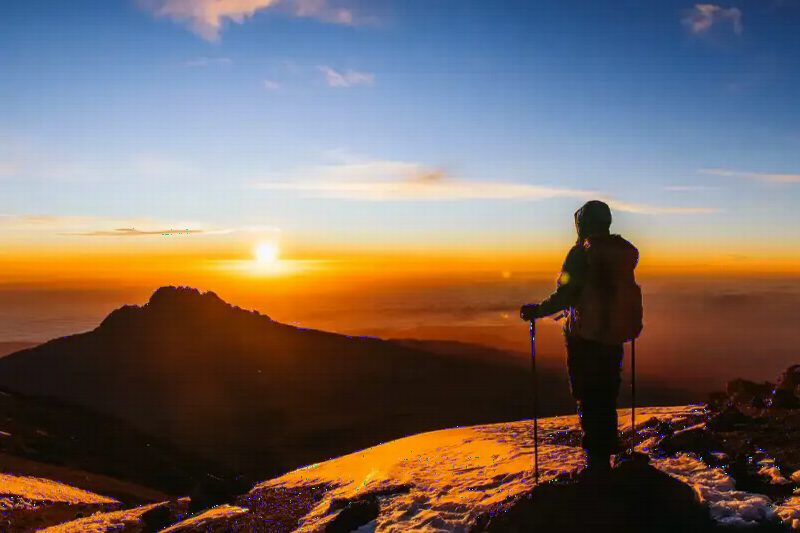
A climber silhouetted against a blazing sunrise high on the mountain, a jagged peak beyond.

Cooking on the mountain

Every climbing group has a cook, and on larger groups an assistant. They carry a kitchen tent, gas or kerosene stoves, pots, and all the food for the whole climb, restocked on some routes by porters coming up from below.

The cook walks ahead of you, reaches camp before you do, and has hot water ready when you arrive. Dinner is cooked by lamplight in the kitchen tent and served in the mess tent. On a nine-day route the cook feeds a group of climbers and a crew of twenty or more, every day, at up to 4,600 metres. It is one of the quiet skills of the mountain.

Fresh food lasts the first few days. After that the meals lean more on dried, tinned and long-lasting ingredients. The cooks are good at making that work.

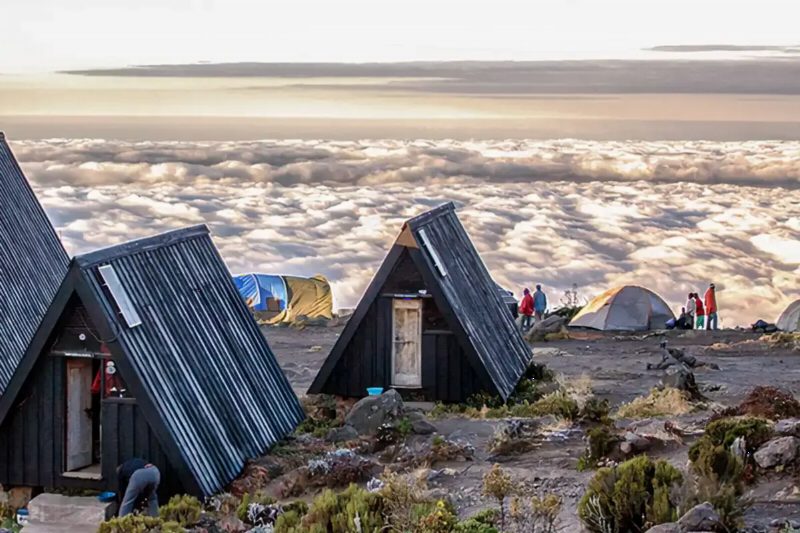
Wooden A-frame huts on a bare ridge above a sea of cloud.

Why you must keep eating

Somewhere above 3,500 metres your appetite drops. Food that looked good at breakfast looks like a chore at dinner. This is one of the normal effects of altitude, and it comes at the worst time.

Your body is burning far more energy than usual. Walking uphill for hours, staying warm at night, and adjusting to thin air all cost calories. If you stop eating, you get weaker, colder and more prone to altitude symptoms.

So eat even when you do not want to. Small amounts, often, is easier than big plates. Soup goes down when nothing else will. Sweet things are easier than savoury for many people. Carry a few of your own favourite snacks from home, because a familiar taste is sometimes the only thing that works.

Climbers crossing the snowfields near the summit, high above a layer of cloud.

Special diets

Vegetarian food is straightforward and the cooks do it well. Vegan, gluten-free, dairy-free and other needs can be catered for if you say so when you book, so the shopping can be done before the climb. It is not something to mention at the gate.

If you have a serious allergy, be very clear about it in writing beforehand, and remind the cook on the first evening. The kitchen is one tent and one set of pots.

If you take particular foods for a medical reason, bring them. The mountain has no shops.

Orange tents pitched on a rocky shelf below Kibo, with cloud drifting across the mountain's flank.

Water

You need three to four litres of water a day on Kilimanjaro, more than you would drink at home. It helps your body adjust to altitude, and being dehydrated makes altitude symptoms worse.

The crew collects water from streams and springs on the mountain and boils or treats it. On the higher camps, water is carried up from lower sources. Carry two or three litres with you each day in bottles or a bladder, and refill at camp.

Bring your own purification tablets or a filter bottle as a backup. And on summit night, keep your water bottle inside your jacket. Bladder tubes freeze.

Two climbers in bright jackets scrambling up a steep rock face.

A sample menu, day by day

Menus vary by cook and by what is in season in Moshi, but a typical week looks something like this.

Day one, in the rainforest. Breakfast in town before the gate. A packed lunch on the trail: a sandwich, a boiled egg, fruit, juice and a chocolate bar. Dinner at camp: cucumber soup, then fried chicken with rice and vegetables, then fresh pineapple.

Day two, into the moorland. Porridge, eggs and toast for breakfast. A hot lunch at a rest stop, usually pasta or a stew. Afternoon tea with popcorn. Dinner: leek and potato soup, then beef stew with chapati, then bananas.

Day three, higher. Pancakes and fruit for breakfast. Packed lunch again. Dinner: pumpkin soup, then spaghetti with a tomato and vegetable sauce, then a slice of cake if the cook has managed to bake one, which they sometimes do.

Day four, the acclimatisation day. Eggs and sausage for breakfast. A hot lunch, because the walking day is short. Dinner: carrot soup, then fried fish or chicken with potatoes, then oranges.

Day five, the day before the summit. Light and easy to digest. Porridge for breakfast. An early, simple dinner of soup and pasta at about five, so you can sleep before the midnight start.

Summit night. Tea and biscuits at eleven. Sweets and a snack bar in your pocket. Then, back at high camp after the summit, a proper hot lunch before the descent to the lower camp, and a big dinner that night when your appetite comes roaring back.

The last morning. A full breakfast, and then lunch at the gate or in town, where the first cold drink of the week is waiting.

Green and yellow tents in a high camp below the snow-streaked summit of Kibo.

What to bring yourself

The crew feeds you. You bring things for the moments in between and for the days your appetite goes.

A bag of your favourite snacks from home: nuts, dried fruit, sweets, chocolate, energy bars. Enough for a couple of handfuls a day.

Electrolyte tablets or powder to add to water. They make plain water more appealing and replace what you lose.

Ginger sweets or tea if you get queasy. Many people find ginger helps with altitude nausea.

And for summit night, something small and sweet in a pocket you can reach with gloves on. A few jelly sweets at five in the morning at 5,500 metres can be the best thing you have ever eaten.

Questions

Is the food good on Kilimanjaro?
Better than most people expect. Three hot meals a day, cooked by a dedicated cook, with soup, a main course and fruit at dinner. Fresh food in the first days, dried and tinned later on.
Can I get vegetarian or vegan food?
Yes. Vegetarian is easy. Vegan, gluten-free and other diets can be arranged if you say so at booking, so the shopping happens before the climb.
Why do people lose their appetite?
Altitude. Above about 3,500 metres most people want to eat less. It is normal, and it is a problem because your body needs more fuel than usual. Eat small amounts often, and bring snacks you like.
Is the water safe to drink?
The crew boils or treats all drinking water. Bring your own purification tablets or a filter bottle as a backup, and keep bottles inside your jacket on summit night so they do not freeze.
Should I bring my own food?
Bring snacks, not meals. Nuts, sweets, chocolate, bars and electrolyte tablets. Something familiar from home is often the only thing you want when the altitude takes your appetite.
Is there alcohol on the mountain?
No, and you should not bring any. Alcohol makes altitude sickness worse and interferes with sleep. Save the celebration for Moshi.
Keep reading

Other guides

All guides

Still have a question?

Ask us directly — we answer every message ourselves.

Talk to a safari expert on WhatsApp (opens in a new tab)