Safaris
Kilimanjaro
Destinations
Experiences
Travel guide
About
Contact Call +255 764 006 061 Plan Your Safari
Planning · 5 min read

Tanzania national park fees, explained

Park fees are the largest fixed cost of any safari or climb, and they are the same for every operator. Who sets them, how they are charged, and why they make a cheap quote suspicious.

Every safari and every Kilimanjaro climb in Tanzania pays fees to enter the parks, and those fees are the single largest fixed cost of the trip. They are set by the park authorities, charged per person per day, and identical for every operator. Understanding them explains most of what a quote is made of.

This page does not list the amounts, because they change and any figure printed here would be wrong within a year or two. It explains how the fees work, so that you can read a quote and ask the right questions.

Itineraries

Safaris we run

All safaris
A lone elephant on bright green grass below a long, forested ridge.

At a glance

Who sets them
TANAPA for the national parks. The Ngorongoro Conservation Area Authority for Ngorongoro. Separate authorities for Zanzibar's marine areas.
How they are charged
Per person, per 24 hours inside the park. Vehicle fees on top.
Ngorongoro Crater
A separate crater descent fee, per vehicle as well as per person. The largest single daily fee on the circuit.
Kilimanjaro
Conservation fee per day, camping or hut fees per night, a rescue fee, and fees for every crew member.
Who pays
Your operator, as part of the quoted price. You should never pay a park fee in cash at a gate.
Do they change
Yes. Periodically, usually upward. Any quote is provisional until confirmed for your dates.
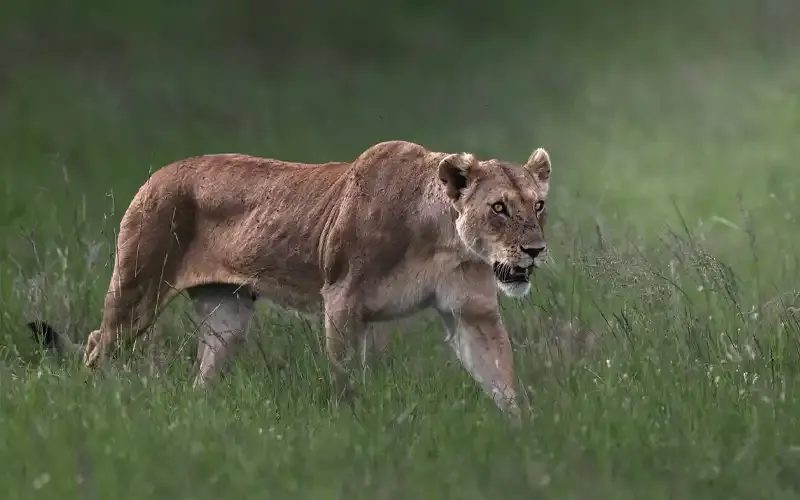
A lioness walking through short green grass.

How the 24-hour rule works

A park entry fee buys you 24 hours inside the park from the moment you pass the gate. Enter at eleven in the morning and your day runs until eleven the next morning. Stay longer and a second day is charged.

This is why itineraries are timed the way they are. Arriving at a park gate at nine and leaving the next day at four in the afternoon costs two days of fees. Arriving at eleven and leaving before eleven costs one. Good operators plan around the clock, and it is one of the things a well-built itinerary does for you quietly.

Concession fees apply on top for camps inside the park boundary. They are charged per person per night and they are why a camp inside the park costs more than a similar one outside the gate. Inside the park you gain the first hour of the day. That is usually worth it.

A black rhino walking across a green plain.

The Ngorongoro Crater

Ngorongoro is not a national park. It is a conservation area with its own authority, and it charges differently.

There is a conservation area entry fee per person per day, as elsewhere. Then there is a separate crater descent fee, charged per vehicle as well as per person, for the six hours you are allowed on the crater floor. It is the largest single daily fee on the northern circuit, and it is why a second crater day noticeably raises the cost of a trip.

The rim lodges sit inside the conservation area, so the entry fee applies for every night you sleep there. Staying in Karatu, outside the boundary, avoids that and changes almost nothing about the crater day itself.

A herd of zebra walking across the green crater floor, with the crater wall behind.

Kilimanjaro

A climb pays several fees at once. A conservation fee per climber per day. A camping fee per night on the tented routes, or a hut fee on Marangu. A rescue fee, which covers the park's stretcher and vehicle service and nothing beyond it. And an entry fee for every guide, cook and porter who walks with you.

Because the fees are per day and per person, they rise with every day you add and every crew member you need. That is why an eight-day Lemosho costs more than a six-day Machame mostly because of fees, not margin, and why there is a floor below which a legitimate climb cannot be sold.

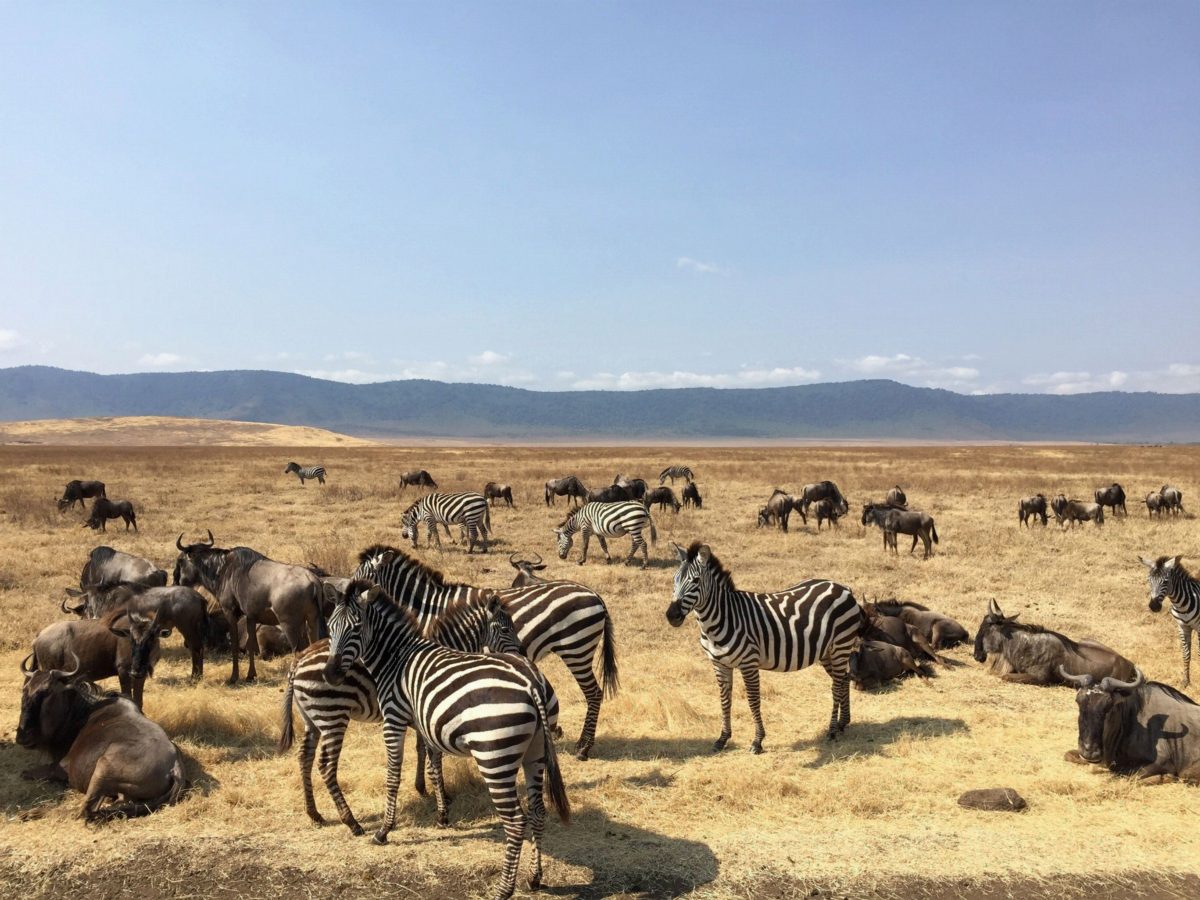
Herds of zebra and wildebeest spread across the crater floor.

Why fees make a cheap quote suspicious

Park fees are the same for everyone. Two operators quoting the same route for the same dates are paying the same fees to the same authorities. Everything that differs between their prices is in what is left after the fees: the vehicle, the guide, the accommodation, the food, the crew.

So when one quote is far below the others, the saving is not in the fees. It is in the vehicle, which may be older or shared with more people. It is in the accommodation, which may be further from the gate than the quote implies. Or, on Kilimanjaro, it is in the porters, through lower pay, heavier loads or fewer of them.

A quote that itemises the park fees is telling you something useful. A single number with no breakdown is not.

Flamingos in the shallows of a soda lake, with zebra and wildebeest along the shore.

Tax and other charges

Tanzania applies value added tax to tourism services, and park fees themselves carry it. A quoted price should include it. Ask if it is not clear.

There are also small charges that sit outside the park fee system: village or community fees at cultural visits, a fee for the Olduvai Gorge museum, activity fees for balloon flights, walking safaris and night drives, and the guide fees at places like the Ngare Sero gorge at Lake Natron. These are usually listed as extras in a quote. Know which ones your route will meet.

Zebra and wildebeest grazing on the dry crater floor below the rim.

Reading a quote

Look for the park fees as a separate line, or ask for them. Look for the crater descent fee if Ngorongoro is on the route. Look for concession fees if any camp is inside a park.

Then look at what is left, and ask what it buys: which vehicle, how many people in it, which camps, how far from the gate, how many crew.

And remember that the fees in any quote are provisional. The authorities revise them, usually with notice, sometimes without. A quote confirmed for your travel dates is the only one that counts.

Questions

How much are Tanzania park fees?
They are set by the park authorities, charged per person per day, and revised from time to time, so no figure printed here would stay correct. They are the largest fixed cost of any safari or climb, and they are identical for every operator. Ask for them as a separate line in any quote.
Are park fees included in my safari price?
They should be, and your operator pays them. You should never be asked to pay a park fee in cash at a gate. Ask for the fees to be itemised in your quote.
Why is the Ngorongoro Crater so expensive?
Because the crater descent is charged separately from the conservation area entry, per vehicle as well as per person, for the six hours on the floor. It is the largest single daily fee on the northern circuit.
What does the Kilimanjaro rescue fee cover?
The park's own stretcher and vehicle evacuation from the mountain. It does not cover a helicopter, hospital treatment or a flight home. Those need travel insurance.
Why does a longer climb cost more?
Mostly because of fees. Kilimanjaro fees are charged per person per day, plus camping or hut fees per night and entry fees for every crew member, so every added day adds fees for you and for the whole crew.
Do park fees change?
Yes, periodically and usually upward. Treat any figure you read, including in an old quote, as provisional until it is confirmed for your travel dates.
Keep reading

Other guides

All guides

Still have a question?

Ask us directly — we answer every message ourselves.

Talk to a safari expert on WhatsApp (opens in a new tab)