Safaris
Kilimanjaro
Destinations
Experiences
Travel guide
About
Contact Call +255 764 006 061 Plan Your Safari
Safari Planning · · 7 min read

How Many Days Do You Need for a Tanzania Safari?

What four days buys you, what six adds, and the point at which extra days stop improving the trip.

Last updated
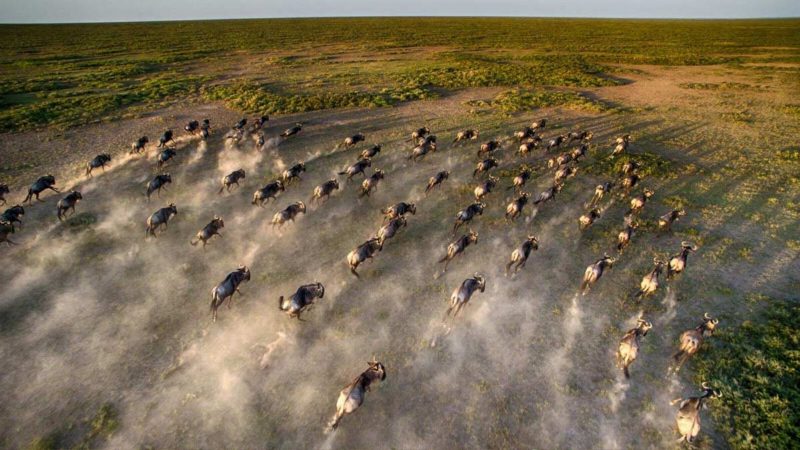
The northern circuit's parks sit close enough together that short safaris genuinely work here. That isn't true in much of Africa. Below, each length and what it realistically covers.

Three to four days

Enough for the Ngorongoro Crater and a first taste of the Serengeti, or for a slower loop of Tarangire, Lake Manyara and the crater. You will spend a fair proportion of it driving, and the Serengeti will be a glimpse, not an exploration.

This works well as an add-on to a Kilimanjaro climb or a business trip, and it's a real safari, not a token one. It isn't the trip to fly halfway around the world for on its own.

Five to six days

The point at which the Serengeti gets proper time. Two nights inside the park instead of one changes it from a destination you passed through to one you looked at, and the second full day is usually where the trip's best sighting happens.

For most first-time visitors travelling long-haul, this is the shortest length we would actively recommend.

Seven to nine days

Comfortable. Enough to add Tarangire or a cultural day at Lake Eyasi without cutting Serengeti time, enough to absorb a slow morning or a vehicle problem without the itinerary collapsing, and enough that you stop watching the schedule.

This is where most of our trips land, and where the balance between cost and experience is best.

Ten days and beyond

At this length you can either go deeper, with several nights in one Serengeti region following what you find, or go wider, adding Zanzibar, Lake Natron or a Kilimanjaro trek.

Diminishing returns set in on pure game driving somewhere around here. Ten days of nothing but game drives is a lot of game drives. Most longer trips work better with a change of activity in them.

The mistake to avoid

Adding parks instead of days. A fourth park on a five-day trip costs you more in driving than it returns in wildlife, and the itinerary starts to feel like a coach tour. If the time is fixed, cut a park and stay longer in the ones that remain.

Arrival and departure days

Worth counting honestly. A trip billed as seven days that lands in the evening on day one and flies out in the morning on day seven has five real days in it. Check what the first and last days actually contain in any quote.

Itineraries

Safaris we run

All safaris
A family of elephants crossing a red dirt track just ahead of an open safari vehicle.
By length

What each length actually gives you

Three days
Enough for the Ngorongoro Crater and one other park, usually Tarangire or Lake Manyara. Not enough for the Serengeti, which needs a full day of driving in each direction. A reasonable add-on to a business trip, but not a holiday on its own.
Four days
Reaches the Serengeti and the crater, and nothing else. You spend more time driving per hour of game viewing than on any other length. The right answer when the alternative is not coming at all.
Six days
Where a safari starts to breathe. A full day in the Serengeti with two nights around it, a separate crater day, and less packing and unpacking. This is where most first-time visitors should be looking.
Eight to nine days
No compromises. Two full days in one region instead of one, the option of the southern plains or the far north, and enough margin that a slow morning costs you very little.
Ten days and beyond
You are usually adding a second ecosystem, such as Zanzibar, Lake Natron or the southern parks, not more of the same. Nine days covers the northern circuit thoroughly.
A safari vehicle parked in long grass as the sun sets red behind flat-topped acacias.
Planning

The travel days nobody counts

The single most common planning error is counting the flight days as safari days.

Most long-haul flights land at Kilimanjaro International in the evening, so the day you arrive produces no game viewing at all. Most depart late at night, so the final day is a transfer with a long wait. A "seven-day safari" advertised as such often means five days in the parks.

Read any itinerary by counting the days that begin inside a park. That is the number that matters.

The fix for the wasted days is Arusha National Park. It is under an hour from both the town and the airport, there are no lions so walking is permitted, and a half day there turns an empty arrival morning or departure afternoon into something real.

The other thing worth counting is transfer days. On a nine-day route, two or three of those days are much spent driving between regions. That isn't wasted, because the drives are game drives and the country is the attraction, but it isn't the same as a full day in one park.

Flying a leg converts a transfer day back into a game-viewing day, and often costs less than the vehicle days it replaces.

A line of safari vehicles parked along a track on the crater floor.
Also consider

Length depends on what you came for

The right number of days isn't a fixed answer, because it depends on what you're trying to see.

For a general first safari, six days is enough to leave satisfied and nine is enough to leave unhurried.

For the river crossings, add days, not parks. Three or four nights in the northern Serengeti during the season is the minimum that converts a lottery into good odds, and reaching the north sensibly means flying.

For the calving, three nights at Ndutu between December and March, plus the rest of the circuit around it. So eight days or more.

For photography, longer than you think. The gains come from returning to the same sighting in different light, which needs two full days in a region, not one.

For a family, fewer parks and more nights in each, whatever the total. Six days across two parks beats six days across four.

And if the days are genuinely fixed and short, spend them in the central Serengeti and the crater, both of which work in any month.

Wildebeest walking in a long line past a safari vehicle on open grassland.
Next steps

Turning a number of days into an itinerary

Once the length is settled, three decisions follow and they're worth taking in this order.

Which region of the Serengeti. This depends entirely on your month: the centre in any month, the southern plains from December to March, the far north from July to October. Getting this right matters more than any other single choice, and it's the one most short itineraries leave to default instead of deciding.

Whether to fly a leg. On anything over about a week, replacing a full driving day with an hour in the air buys back a day of game viewing and frequently costs less than the vehicle days it saves. It is close to essential if the far north is on the list.

How many nights in each place. Fewer parks with more nights in each is almost always a better week than the reverse. Two nights minimum, three where you can.

After that, camps. Ask which ones by name and how far each is from a park gate. That single answer explains most of the difference between two quotes for the same route.

Travellers standing in an open-roof vehicle, photographing elephants a few metres away.
Practical

What to do with a short trip

If the days genuinely can't stretch, a few decisions make a short safari work far better than it otherwise would.

Base yourself in one place instead of moving. Two nights in the central Serengeti beats one there and one somewhere else, because you lose a morning and an afternoon to every transfer.

Choose the central Serengeti and the Ngorongoro Crater. Both hold game in every month regardless of where the migration is, so a short trip on fixed dates still works.

Fly one leg if the budget allows. On a four-day trip a driving day is a quarter of the holiday. An hour in the air gives most of it back.

Use the arrival or departure day. Arusha National Park is under an hour from the airport, has no lions so walking is permitted, and turns a wasted day into a real one.

And start early every morning. On a short trip the first hour after dawn is a much larger share of your total game viewing than it's on a long one.

Travellers in an open-roof vehicle watching two elephants a few metres away on dry ground.
In short

The short answer

Six days for a comfortable first safari, eight or nine to stop compromising, four if the alternative isn't going. Count only the days that begin inside a park. Arrival and departure days rarely do.

A safari vehicle on a red dirt road winding across the crater floor, with the forested rim behind.

Adding the coast or a climb

Most people who come to Tanzania want more than the parks, and the arithmetic changes when they do.

A safari and Zanzibar needs the safari days protected first, then three nights minimum on the island once transfer days are counted, and five to seven to stop it feeling rushed. Ten days is realistically six on safari and three on the coast plus travel. Fourteen days is comfortably eight and five.

A safari and Kilimanjaro is a longer proposition. A climb is five to eight days on the mountain plus a night either side in Moshi, plus a rest day before the safari starts. Two weeks covers a seven-day climb and a five-day safari without either feeling squeezed.

All three together needs closer to three weeks, and the order that works is climb, rest, safari, coast. Hardest first, gentlest last.

More from the journal

Keep reading

All stories

Journal

Altitude on Kilimanjaro

Altitude, not fitness, stops most people. The way acclimatisation is managed on the mountain, and why this article…

Talk to a safari expert on WhatsApp (opens in a new tab)