7-Day Tarangire, Ngorongoro & Lake Eyasi Safari
Places Tarangire, Ngorongoro, Lake Manyara, Lake Eyasi
Seven days through Tarangire, Lake Manyara and the Ngorongoro Crater, ending with a morning at Lake…

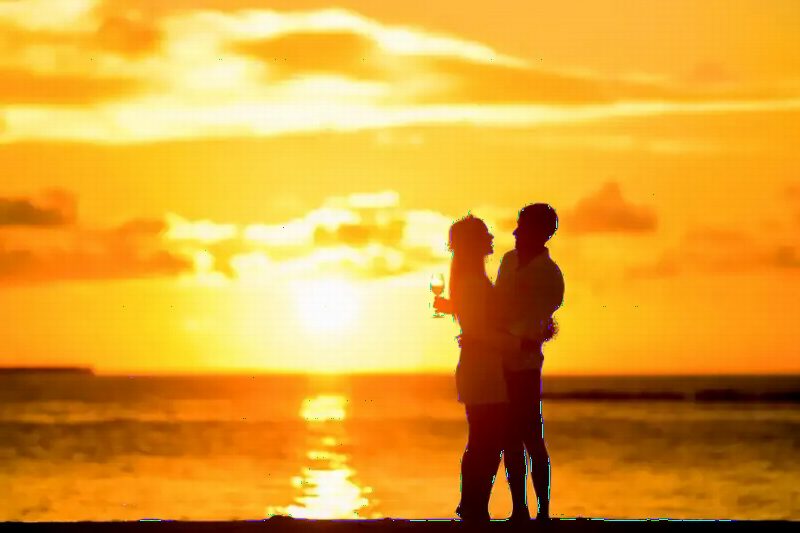
What we change for a honeymoon: fewer moves, better-sited camps, and the beach at the end.
We don't sell a fixed honeymoon package. The things that make a honeymoon work are mostly things taken out of a normal itinerary, not things added to it.
Places Tarangire, Ngorongoro, Lake Manyara, Lake Eyasi
Seven days through Tarangire, Lake Manyara and the Ngorongoro Crater, ending with a morning at Lake…
Places Lake Manyara, Serengeti, Ngorongoro
Eight days built around the herds: Lake Manyara, Ndutu in the calving season, two days in the Serengeti…
Places Lake Manyara, Serengeti, Ngorongoro
Nine days across the northern circuit at an unhurried pace: Lake Manyara, the Serengeti, two nights at…

Fewer moves. A standard safari might change camp four times in eight days. A honeymoon version does it twice. Packing, unpacking and driving are the least romantic parts of a trip, so we cut them.
Better siting over more parks. Two nights in a well-placed Serengeti camp beats three nights spread across three lodges chosen for logistics.
A later start on at least one day. Not every morning has to begin in the dark.
The coast at the end. Most honeymoon trips finish in Zanzibar. Safari first while you have the energy, island afterwards.

Anything beyond that, such as a particular room, a private dinner, flowers or a cake, is arranged by the camp, not by us, and depends entirely on the property. Tell us it's a honeymoon when you enquire and we'll pass it on and tell you honestly what each place can and can't do. We won't promise something on a lodge's behalf that we haven't confirmed.

Honeymoon dates are usually fixed by the wedding, which sometimes lands in a month that isn't ideal for either the parks or the islands. If that's your situation, say so early. There's often a version of the trip that works well in that month, but it may not be the obvious one.

The standard honeymoon shape, safari first and coast second, is standard because it works. The reasoning is the same as for any combined trip, only more so.
A safari is early mornings, long drives and dust. It is wonderful and it isn't restful. Doing it in the first half and finishing on the coast means the trip ends with lie-ins and swimming, not a four-in-the-morning game drive.
Five to seven days on safari and five to seven on the island is the usual split for a two-week trip. If the wildlife is the priority, protect the safari days first. If the point is rest, cut the safari to six days and give the island the rest.
Honeymoon trips differ from ordinary ones in pace, not luxury. Fewer parks, more nights in each, later starts on at least some days, and no transfer that eats a whole day. Two nights everywhere and three in the Serengeti beats a five-park tour.
Consider flying a leg. It replaces a full day of corrugated road with an hour and buys back a day you can spend doing nothing.
Say it's a honeymoon when you book. Camps do things about it, and they can't if they don't know.
A safari isn't a private experience in the way a honeymoon brochure implies. The parks are public, the tracks are shared, and a good sighting attracts vehicles. A private vehicle buys control of your own day, which is genuinely valuable. It isn't exclusivity.
Camps are social. Most have communal dining, and while nearly all will lay a table for two if you ask, asking in advance works much better than asking at dinner.
Power and connectivity are limited inside the parks at every price point. Solar, restricted charging hours, patchy signal.
The crater rim is cold at 2,300 metres, year-round, and several of the more romantic-looking rim lodges have very little heating.
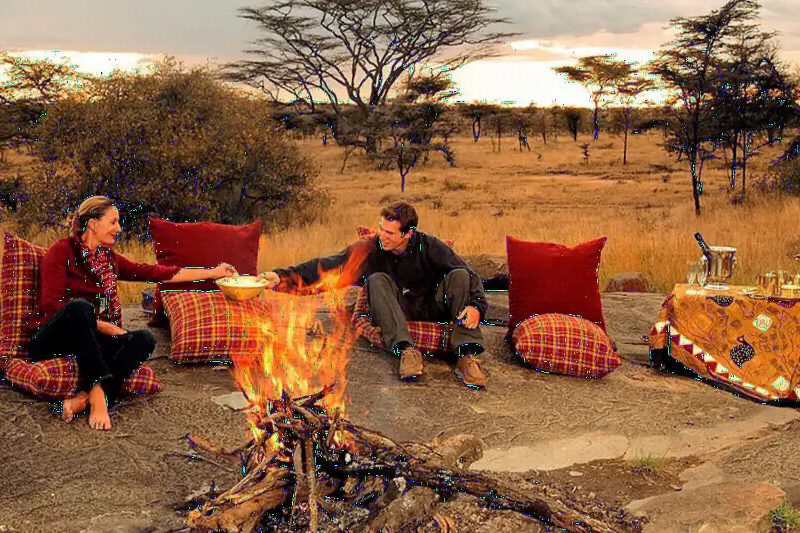
Bush breakfasts, sundowners and private dinners are usually arranged, not spontaneous, and they carry a cost. Ask what's included. Do not assume.
And the timing of the wedding matters: arriving on safari after two days of travel with no sleep is the most common reason a honeymoon's first days are a blur. A night in Arusha before the parks isn't a wasted day.

Both halves of a safari-and-coast honeymoon share a season, which makes the choice simpler than it looks.
June to October is dry on the mainland and warm and dry on the island. It is the safest choice, the busiest, and the most expensive. If your wedding date sits here, book early. The small camps that suit a honeymoon fill first.
December to March is the other reliable window: the calving season on the southern plains, the hottest and driest stretch on Zanzibar, and the best light of the year for photographs. February is the peak of both.
April and May are the long rains on the mainland and the wettest months on the coast, with many island hotels closing in April. It is much the cheapest period, and it's the only one where weather is a genuine argument against the trip.
November is the short rains. Quiet, green, good value, and usually afternoon showers instead of all-day rain.
If the wedding date is fixed and falls awkwardly, the fix is usually the coast, not the safari. The northern beaches are marginally drier, and the parks work in every month.

A honeymoon has more moving parts than an ordinary trip, and most of them have to be booked, not sorted out on the day.
Tell us it is a honeymoon when you enquire, not when you arrive. Camps will arrange things: a private table, a breakfast in the bush, a room with the better view. None of it happens if nobody knows.
Ask what a private dinner or a sundowner actually costs. These are usually extras, not inclusions, and knowing the number in advance saves an awkward conversation later.
Check the names on every booking. If one of you is changing surname after the wedding, every flight, permit and camp booking has to match the passport you will actually travel on. This causes more honeymoon problems than anything else.
Build in a rest day. Arriving on safari straight after a wedding and two days of travel is why the first days of most honeymoons are a blur. A night in Arusha is not a wasted day.
Leave a buffer before your international flight home. Bush flights depend on the weather, and connecting from an airstrip to a long-haul departure on the same day is possible but unwise.

Say so when you book, and say so again at each camp when you arrive.
Camps like to do something, and most of them will, but they need to know. It varies. A rearranged table, a private dinner, something small left in the room. It isn't a package you're buying and nobody should be promising you a specific gesture in advance.
The other reason to mention it is practical. It affects which room they give you, and a quiet room at the end of a row matters more on a honeymoon than anything they can put on a bed.

Safari first, coast second, fewer parks and more nights in each. Say it's a honeymoon when you book, and check every booking matches the passport you'll actually travel on.
Tell us your dates and we will put something together.