
Wildlife · 9 min read
The Serengeti Migration, Month by Month
Where the wildebeest herds are through the year, and what that means for when to travel.
The things to know before you book: when the herds move, what to pack, and the questions we get asked most often.
Where the wildebeest herds are through the year, and what that means for when to travel.

What to bring on safari and up Kilimanjaro, and what you can leave behind.

The questions we're asked most often, answered in full.

Most visitors need a visa, and most can get one on arrival or online in advance. What the visa covers, what to bring to the desk, and the mistakes that hold people up at the airport.

Park fees are the largest fixed cost of any safari or climb, and they are the same for every operator. Who sets them, how they are charged, and why they make a cheap quote suspicious.

Fly into Kilimanjaro International for the northern circuit, Dar es Salaam for the south, Zanzibar for the beach. Airports, routes, transfers, and the arrival day that most itineraries waste.

A permanent lodge, a tented camp, a mobile camp that follows the migration, or a tent you camp in yourself. Each level described honestly, and what the price is buying.

Tipping is customary in Tanzania and it is a real part of what your guide and camp staff earn. Who to tip, how it is usually done, and how to have the cash ready.

Malaria, yellow fever, the routine jabs, and the small things that spoil a trip. What to discuss with your doctor or travel clinic, and when.

Tanzanian shillings for small things, US dollars for the big ones, and cash for almost everything outside the cities. How money works on safari and how much to carry.

An enquiry, a conversation, a draft itinerary, a quote, a deposit, and then the details. What happens between your first message and your first game drive.

Early mornings, long quiet stretches, a vehicle that becomes home, and hours that pass in a way nothing else does. What the days feel like, and what surprises people.

Medical cover with a high limit, evacuation from the bush, cancellation, and the activity clauses. What a safari policy has to include, and where ordinary policies fall short.

A national park on the doorstep, a crater lake, coffee farms, the markets and Mount Meru. The best ways to spend a day or a half day in Arusha before or after a safari.

Materuni waterfall, Kikuletwa hot springs, Marangu, Lake Chala and the coffee cafés. What to do with a day or two in Moshi before or after a Kilimanjaro climb.

Six routes go up Kilimanjaro. They differ in days, scenery, crowds and how well they help you get used to the altitude. This page puts them side by side.

Kilimanjaro is a walk, not a climb. The altitude, the cold on summit night, and the length of the days make it hard. This page tells you what to expect.

Altitude sickness is why people turn back on Kilimanjaro. This page explains what it is, what it feels like, how to lower your risk, and when to go down.

Wake-up tea at six, breakfast, walk, lunch, walk, camp by mid-afternoon. Here is how a day on the mountain runs, from the first tea to the last check.

Three cooked meals a day, snacks on the trail, and more of it than you expect. This page covers what the crew cooks, how, and why you should eat even when you do not want to.

A Kilimanjaro climb is carried by a crew that outnumbers the climbers. Here is who they are, what they do, how they are protected, and how tipping works.

You do not need to have climbed a mountain before. Most people on Kilimanjaro have not. This page covers what a first-timer needs to know, and what to choose.

Three months of regular walking, some hills, a loaded daypack, and two long days back to back. Here is a training plan that actually matches what the mountain asks.

You leave camp at midnight, climb for six hours in the cold and dark, reach the roof of Africa at sunrise, and then descend for most of the day. This page describes how it really feels.
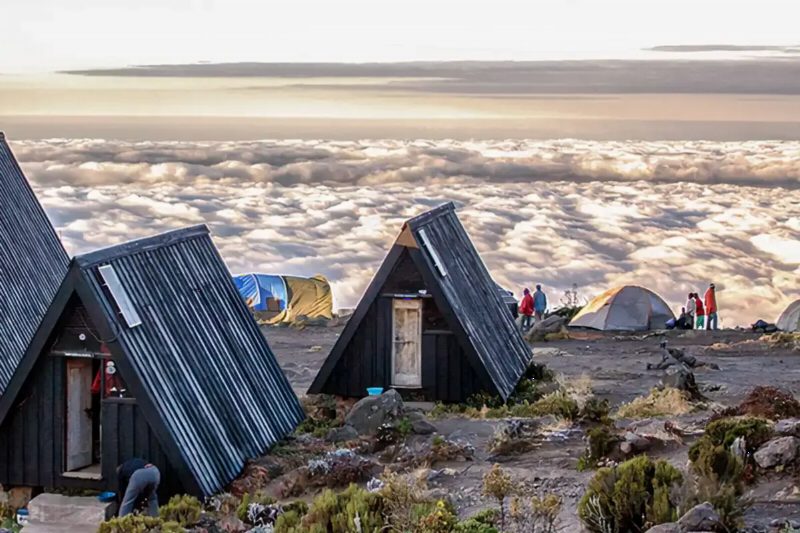
Tents on every route but one, huts on Marangu, and a high camp on bare rock the night before the summit. A tour of the camps, from the rainforest to the crater rim.

Daily health checks, trained guides, emergency oxygen, and a park rescue system. Here is how safety works on the mountain, and what happens if something goes wrong.

Warm forest, cold nights above 3,000 metres, and a summit that can be twenty below with wind. The weather on the mountain, zone by zone and month by month.

Every month on the mountain, in one place: weather, crowds, summit snow and which route works best. Pick your dates from this.

The porters carry your main bag. Each day you carry a small pack with water, layers, snacks and a few essentials. Here is exactly what goes in it, and what stays out.

Your insurance must cover trekking to 6,000 metres, and many ordinary policies stop far lower without saying so. The warning signs to look for, and what the park rescue fee does and does not cover.

Fly into Kilimanjaro International, stay in Moshi or Arusha, and drive to the gate on the first morning. Here is how the arrival works, and what to do the day before.

Three points on the crater rim count as the summit of Kilimanjaro. Here is where each one is, what it takes to reach it, and why all three earn a certificate.

Two landmarks on the southern routes that every climber asks about. One is a scramble with your hands. The other is the day that gets you ready for the summit.
Nobody climbs Kilimanjaro unaccompanied, but plenty of people arrive alone. Private climb or join a group, what each costs you, and what solo travellers should know.

There is ice on the equator, and it is disappearing. What the glaciers are, why they exist, how much has gone, and what you actually see on summit morning.

The numbers people ask for: how high, how wide, how old, how many climb it, and why it stands alone. Clear answers, one fact at a time.
The questions people ask before they book a climb, in one place, with short honest answers and links to the pages that go deeper.

Most climbers add a safari, and the order, the rest day and the route between mountain and parks decide how well the two fit. A plain guide to putting them together.

Meru is 4,566 metres, four days, and an hour from Arusha. Climbing it first is the best acclimatisation there is. This page covers what it involves and who it suits.
Three decisions shape a Tanzania safari more than any others: when you travel, how long you have, and how you want to sleep. Season determines what you are likely to see. The dry months concentrate animals around water and make them easier to find, while the green season brings migrant birds, newborn game and far fewer vehicles. Length determines how many parks are sensible. Adding a fourth park to a five-day trip usually costs you more in driving than it returns in wildlife.
Accommodation ranges from public campsites to permanent lodges, and it is the single biggest lever on price. Be direct with us about budget early, because it changes what an itinerary can realistically include.
The guides below cover the questions we are asked most often. If yours is not answered here, it is usually quicker to ask us directly than to keep reading.
These are the longer reference pieces, the ones written to be returned to, not read once. Where the travel-guide articles answer a single question, these cover a subject in full.
The safari FAQs page is the broadest, collecting the questions that come up in almost every enquiry: what's included, what to bring, how the vehicles work, what happens if plans change, and what the fees actually are. It is the fastest way to get from nothing to a working understanding of how a Tanzanian safari is put together.
The Serengeti migration guide explains the ecosystem, not just the calendar. Why the herds move, what drives the timing, where they are in each part of the year, and why no operator can promise you a river crossing.
The safari checklist is a practical packing and preparation document, written to be printed or worked through in the fortnight before you fly.
All three are kept current against what's actually true on the ground, not what makes the best copy, which is why several of them tell you what not to expect.
The most useful order is subject first, itinerary second, detail last.
Read the migration guide before you choose your dates, if the herds matter to you. It is the difference between booking a week in the Serengeti and booking a week in the right part of the Serengeti. Those are not the same trip.
Read the FAQs before you compare quotes. Most of the difference between two safari prices comes down to things the FAQs explain: park fees, where the lodge sits, group size, and what is and is not included. Once you know those, two numbers you could not compare become a real comparison.
Read the checklist after you book, not before. It is a preparation document, and it is most useful once your route and season are settled. The kit for February on the southern plains is not the kit for August on Kilimanjaro.
Treat all three as a starting point for questions, not a replacement for them. If anything here does not answer your situation, ask us directly.

Some things are deliberately left out of these pages, and the absences are choices, not oversights.
There are no guaranteed sightings. The migration guide explains where the herds usually are and why no date can be promised. Nothing here tells you that you'll see a leopard.
There are no medical recommendations. Wherever altitude comes up, the guidance is to report symptoms to your guide and descend, and to discuss any medication with your own doctor before travelling. That is the whole of it, by design.
There are no current fee figures. TANAPA and the NCAA revise their tariffs, and a number that's right today is wrong next season. The guides explain the structure of what you pay instead.
There are no invented reviews. Where testimonials would normally sit, this site links to the external profiles where real ones live.
If something you need isn't covered, it's worth asking directly. The gaps in these pages are usually things that depend on your dates.

Read two of these guides before you contact anybody, because they change the questions you'll ask.
The FAQs explain how a Tanzanian safari is actually assembled: what park fees are and who sets them, what a private trip means, how group size changes the price per person, and what's and isn't included in a normal quote. Knowing that turns two incomparable numbers into a real comparison, and it's the fastest way to work out why one quote is cheaper than another.
The migration guide matters if the herds are any part of the reason you're going. It explains where they're through the year and, more usefully, why no calendar can be precise. That is the difference between booking a week in the Serengeti and booking a week in the right part of it.
The checklist is a preparation document, not a planning one, and it's most useful after the route and the season are settled. The kit for February on the southern plains isn't the kit for August on Kilimanjaro.

Three things are deliberately absent from these pages, and it's worth saying which.
Current park fees. TANAPA and the NCAA revise their tariffs, and a figure that's correct today is wrong next season. The guides explain what you're paying for and who sets it, instead of printing numbers that age badly.
Medical advice. Wherever altitude appears, the guidance is the same each time: report symptoms to your guide, and descend. Medication is described as a conversation for your own doctor before you travel. Nothing here doses, diagnoses or clears anyone to climb.
Guarantees. No guide on this site promises a sighting, a crossing or a summit, because none of those can be promised.
They do cover the reasoning: why the herds move when they do, why lodge position matters more than lodge quality, why days on a mountain matter more than fitness. That reasoning stays true when the numbers change.

Read the FAQs first if you're comparing operators. It explains park fees, what a private trip includes, how group size changes the price per person, and what a normal quote covers. That turns two incomparable numbers into a real comparison.
Read the migration guide first if the herds are any part of the reason you're going. It is the difference between booking a week in the Serengeti and booking a week in the right part of it.
Read the checklist last, after the route and the season are settled. It is a preparation document, not a planning one.
These guides are revised when what they describe changes, not on a schedule, and the things most likely to change are fees, entry requirements and camp availability.
That is why none of them prints a current park fee or a visa rule as settled fact. Both are checked against your travel dates when a trip is quoted, not assumed from a page.
If something here contradicts what you've been told elsewhere, or what you find on an official site, treat the official source as correct and tell us so the page can be fixed.