Safaris
Kilimanjaro
Destinations
Experiences
Travel guide
About
Contact Call +255 764 006 061 Plan Your Safari
Kilimanjaro · 7 min read

Climbing Kilimanjaro, step by step

The whole climb in eight steps, from picking a route and a month to the night on the summit and the walk back down. Each step links to the page that covers it in depth.

Climbing Kilimanjaro is a long chain of small decisions. You pick a route and a number of days. You pick a month. You get fit, sort your kit and buy the right insurance. Then you fly in, rest, and walk uphill for a week with a crew who do this for a living. This guide walks through the whole chain in order, so you can see where each choice fits.

Each step is short on purpose. Where a step needs more, it points to the page that covers it in full: the routes compared, the climb month by month, training, a typical day and summit night.

Itineraries

Kilimanjaro climbs we run

Compare all routes

The climb in eight steps

Step 1
Choose a route and how many days to take.
Step 2
Pick the month you climb.
Step 3
Train your legs and lungs for steady uphill walking.
Step 4
Sort insurance, health checks and kit.
Step 5
Fly in, rest a night, meet your guide.
Step 6
Walk the days on the mountain, slowly.
Step 7
Climb through summit night to the crater rim and Uhuru Peak.
Step 8
Walk down, say thank you to the crew, and rest.

Step 1: Choose a route and a length

There are several ways up the mountain, and they differ more than the map suggests. Some climb steeply and fast. Some take a longer line around the side of the peak. Some sleep in huts and most sleep in tents. The Machame and Lemosho routes are the most popular for good reason: they climb high and sleep lower, which helps the body adjust.

The number of days matters more than the route. Your body needs time to adapt to thin air, and every extra day on the mountain gives it that time. A short climb saves money and leave. A longer one gives you a much better chance of standing on the top, and a much nicer week.

If you are unsure, choose the longer version of the route you like. Few people regret the extra day. Many people regret skipping it.

Step 2: Pick your month

Kilimanjaro can be climbed in every month, but some months are kinder than others. The two dry spells, from late June to October and from January to early March, bring clearer paths and better views. They are also the busiest times on the mountain.

The long rains fall in April and May. Paths turn to mud, clouds hide the views, and fewer people climb. November brings the short rains, which tend to come as afternoon showers.

Cold is the one thing that never changes. Nights near the top are well below freezing in every month, and summit night is cold whatever the calendar says. Plan your kit for that, then pick the month that suits your life and your view of crowds.

Step 3: Get your body ready

You do not need to be an athlete. You do need legs that can walk uphill for six hours, day after day, and still enjoy it. The best training is the thing itself: long walks on hills, with a loaded daypack, in the boots you will wear.

Start a few months before you fly. Build up to back-to-back long walks at the weekend, because the climb is about walking well when you are already tired. Stairs, cycling and steady running help on top of that.

See your doctor before you book, and tell them about the altitude. Some medicines and some conditions matter at height. Your doctor can also talk to you about altitude medicine, which some climbers take and some do not.

Fitness helps with comfort. It does not protect you from altitude sickness. Pace and days do that.

Step 4: Sort insurance, health and kit

Your travel insurance must cover trekking to the height of the summit, which is just under 6,000 metres. Many ordinary policies stop well below that. Read the activity section, find the altitude limit, and ask the insurer to confirm it in writing if it is unclear. Buy the policy when you pay your deposit.

Check your vaccines with a travel clinic. Bring a small first-aid kit with blister care, plasters, painkillers and anything you take at home.

Kit is about layers. You walk through warm forest on the first day and into deep frost on summit night. You need good boots that are already broken in, a warm sleeping bag, a down jacket, waterproofs, gloves and a hat. A small daypack carries what you need while you walk. Most of the rest can be hired in Moshi or Arusha if you would rather not buy it.

Step 5: Arrive and rest

Fly into Kilimanjaro International Airport, which sits between Moshi and Arusha. Both towns are an easy drive from the terminal. Plan to arrive at least a day before the climb starts. Long flights, late bags and jet lag are all easier to fix with a spare day.

The evening before the climb, your guide comes to the hotel. They talk you through the route, look at your kit, and point out anything missing. This is the time to ask questions and to hire what you need.

You leave the things you will not need on the mountain at the hotel. Clean clothes for the day you come down, travel papers you do not need on the trail, and anything you are taking on to a safari or the beach can all stay behind in a locked bag.

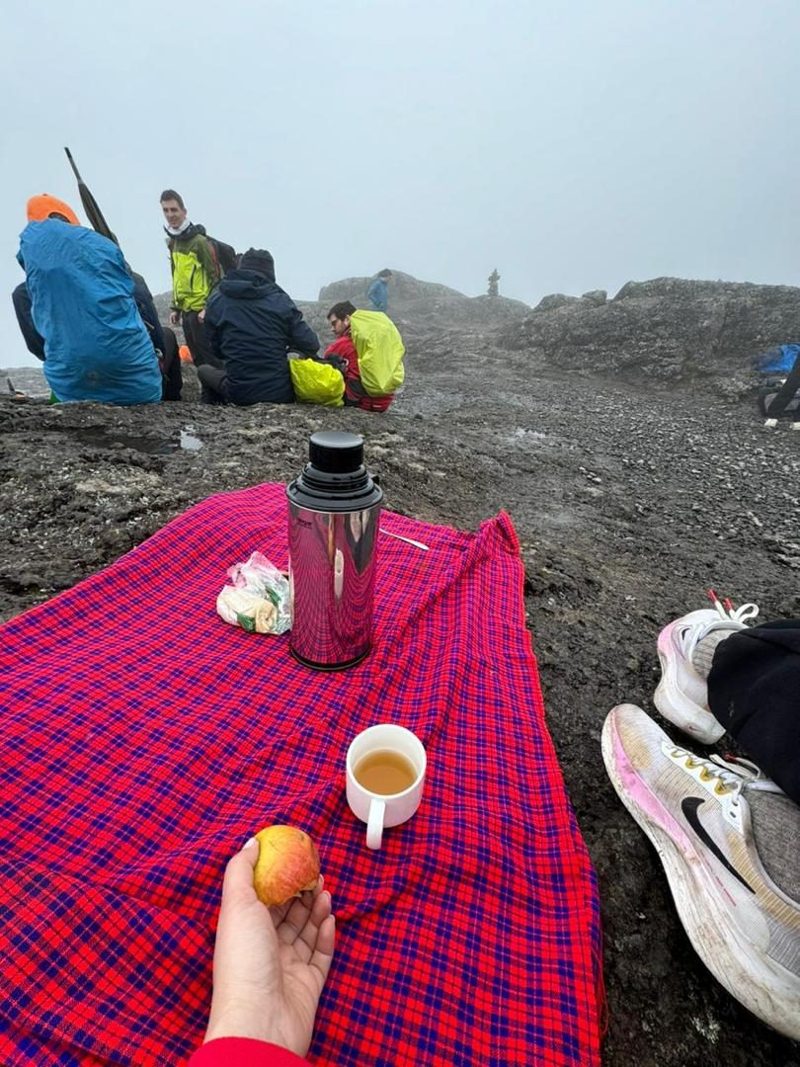
A flask, a cup of tea and an apple on a red Maasai cloth, with climbers resting behind.

Step 6: The days on the mountain

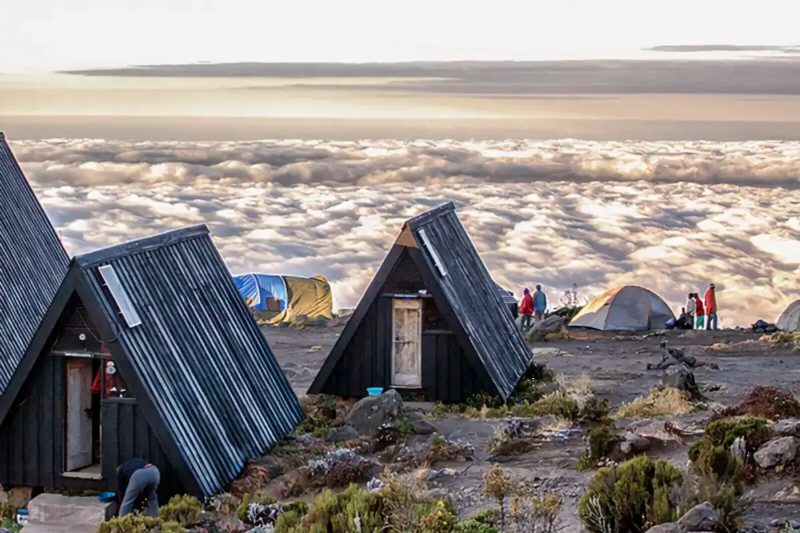
A day on the mountain has a steady rhythm. You wake early to tea, wash in a bowl of warm water, eat breakfast, and set off. Most days you walk for four to seven hours, at a pace that feels far too slow at first. That slow pace is the point. The guides call it pole pole, which means slowly, slowly.

Porters carry your main bag, the tents, the food and the water. They pass you on the trail and have camp set up when you arrive. You carry only your daypack, with water, snacks, a warm layer and a rain jacket.

Afternoons are for rest, food and short walks higher up to help the body adjust. Each evening the guide checks how you feel and measures the oxygen in your blood. Tell them the truth about headaches, sleep and appetite. It is how they keep you safe.

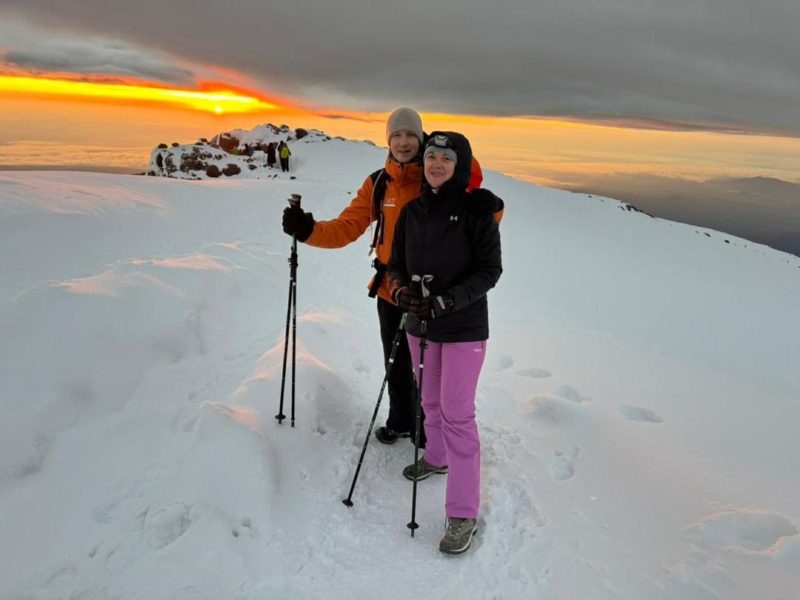
Two climbers with trekking poles on the snow near the summit of Kilimanjaro at sunrise.

Step 7: Summit night

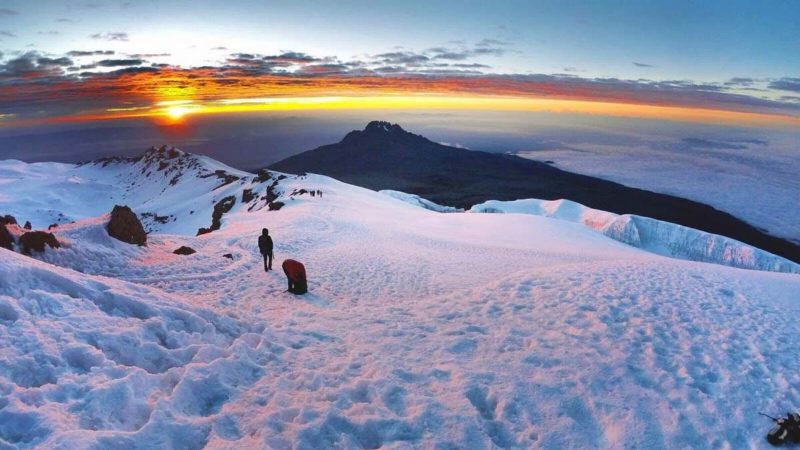
The summit push starts in the dark, usually close to midnight. You leave the high camp with a head torch, every warm layer you own, and a slow line of lights above you on the slope. For hours there is only the next step, the cold, and the voice of your guide.

There are good reasons for the night start. The loose scree is frozen and firmer to walk on. You reach the crater rim as the sun comes up. And you have the whole day to get back down to thicker air before the afternoon cloud comes in.

Most climbers reach the rim at Stella Point or Gilman's Point at dawn. Uhuru Peak, the true summit, is a further walk along the rim, past the glaciers. You stay at the top only a short while. Then you turn round and go down.

Step 8: Coming down, and after

Going down is fast. After the summit you return to high camp for a short rest and some food, then keep walking down to a lower camp for the night. Each step makes the air thicker and your head clearer. The last day takes you back through the forest to the park gate.

At the gate the park records your climb, and you receive a certificate that names the point you reached. Most groups then say thank you to the crew in a small ceremony, often with singing, and hand over the tips.

Your legs will be sore for a few days, mostly on the way down stairs. A night in a hotel with a hot shower helps a great deal. Many climbers follow the mountain with a few days on safari or on the beach in Zanzibar, which is an easy way to rest while still seeing the country.

Common mistakes, and how to avoid them

Choosing the shortest climb to save a day or two. It makes the summit much less likely and the week much harder.

Walking too fast on the first days, because you feel strong. Altitude does not care how fit you are.

New boots. Blisters can end a climb on the second day.

Not drinking enough. Thin, dry air pulls water out of you all day.

Hiding a headache from the guide. They can only help with what they know about.

And skipping the spare day before the climb. A late bag with your boots in it is a small problem with a spare day, and a big one without.

Questions

Do I need a guide to climb Kilimanjaro?
Yes. The park only lets climbers on the mountain with a licensed guide, booked through a registered operator. You cannot climb it on your own, and every group has a crew of guides, a cook and porters.
How many days should I plan in Tanzania for a climb?
Add two days to the length of the climb: one to arrive and rest before you start, and one to recover after you come down. If you plan a safari or a beach stay after the climb, add those days on top.
Is there a weight limit for the bag the porters carry?
Yes. Your operator gives you a limit for your main bag. Please keep to it, because porter loads are weighed at the park gate and a heavy bag puts extra weight on someone else's back.
Where do I leave the luggage I do not need on the mountain?
At your hotel in Moshi or Arusha. Hotels keep a locked store for climbers, so clean clothes, travel papers and anything for a safari or the beach can wait for you there.
Can I hire gear in Moshi or Arusha?
Yes. Sleeping bags, down jackets, poles, gaiters and other kit can be hired in both towns. Boots are the one thing to bring yourself, already broken in.
Do I get a certificate for climbing Kilimanjaro?
Yes. The park gives you a certificate at the gate on the way down. It records the point you reached, whether that is the crater rim at Stella Point or Gilman's Point, or the true summit at Uhuru Peak.
What happens if I do not feel well on the climb?
Tell your guide straight away. They check every climber each evening and know the signs of altitude sickness. Most problems get better with rest or by walking down, and the guide decides when someone must go down.
Keep reading

Other guides

All guides

Still have a question?

Ask us directly — we answer every message ourselves.

Talk to a safari expert on WhatsApp (opens in a new tab)