4-Day Serengeti & Ngorongoro Safari
Places Lake Manyara, Serengeti, Ngorongoro
Four days from Arusha through Lake Manyara, the Serengeti and the Ngorongoro Crater, in a private…

A collapsed volcano holding its own ecosystem


The Ngorongoro Conservation Area covers a huge stretch of highland plains, savanna, savanna woodland and forest. At the centre of it is the crater everyone comes for.
Ngorongoro Crater is the largest unflooded, unbroken caldera in the world. It is about 20 km across and around 600 metres deep, and the floor inside it covers roughly 260 square kilometres. That is a small area holding a great many animals, which is why a single morning down there delivers more than a full day almost anywhere else.
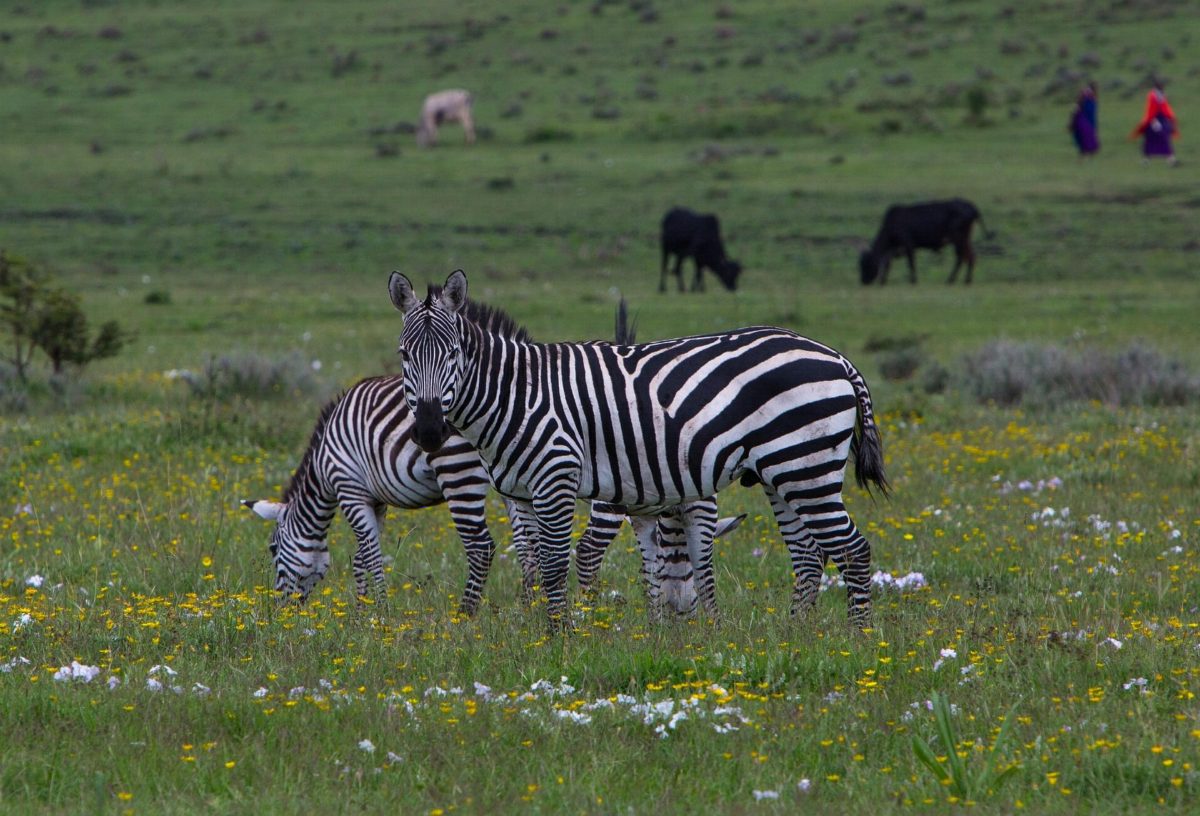
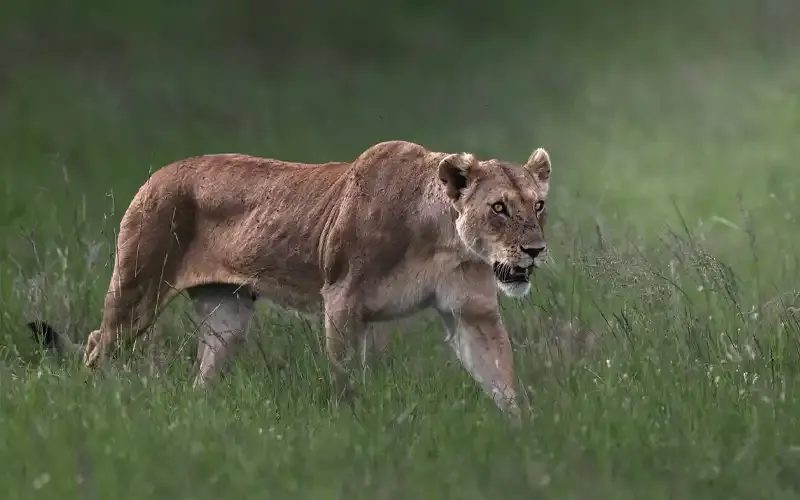
The crater floor carries wildebeest, zebra, eland, and Thomson's and Grant's gazelle, with the lions that live off them. The lion density here is among the highest recorded anywhere. Black rhino live on the floor too. This is one of the better places in Tanzania to see them, usually at a distance. Higher up, the rim rainforest holds leopard, elephant, buffalo, mountain reedbuck, spotted hyena, jackal and cheetah.
The conservation area is not a national park, and that matters. It was set up in 1959 as a multiple land use area, which means Maasai families live here and graze their livestock across the highlands alongside the wildlife. It is one of the few places in the world where that arrangement has held.
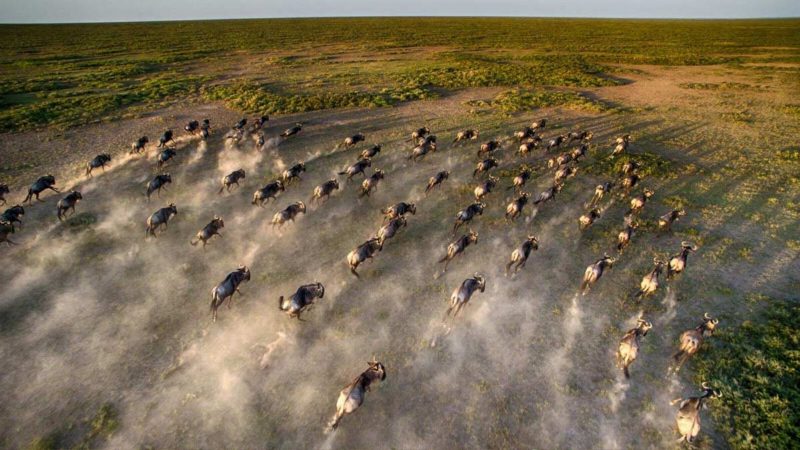
The migration passes through. The herds move south into the area around December and head north again in June, and while they are here the southern plains are where the calving happens.
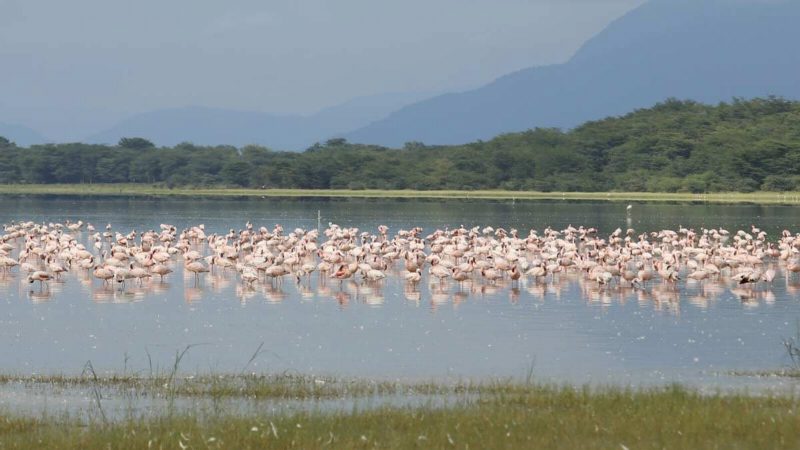
Birdlife is exceptional. More than 500 species have been recorded, including ostrich, white pelican, and both greater and lesser flamingo. The best places to look are Lake Magadi on the crater floor, Lake Ndutu in the west, and the lake inside the Empakaai Crater. The Ndutu area also holds good numbers of cheetah and lion.
At the far end of the conservation area is Olduvai Gorge, where the Leakeys found some of the earliest evidence of human ancestors anywhere in the world. It has its own page on this site, and it is an easy stop on the road between the crater and the Serengeti.
Most people come for the crater, and it deserves the attention. It is an unflooded, unbroken caldera with a floor that holds a permanent concentration of wildlife inside walls several hundred metres high. Because the animals don't need to leave, game viewing on the floor is dependable in a way little else in Africa is, which is also why it's busy.
The Conservation Area is much larger than the crater alone, and unusually it isn't a national park. Maasai families live and graze livestock across the highlands alongside the wildlife, under a multiple land-use designation established in 1959. At the far end lies Olduvai Gorge, where the Leakeys' excavations produced some of the most important hominin finds anywhere.
Places Lake Manyara, Serengeti, Ngorongoro
Four days from Arusha through Lake Manyara, the Serengeti and the Ngorongoro Crater, in a private…
Places Serengeti, Ngorongoro, Olduvai Gorge
Six days with two full days in the Serengeti, Olduvai Gorge on the way in and the Ngorongoro Crater to…
Places Tarangire, Ngorongoro, Lake Manyara, Lake Eyasi
Seven days through Tarangire, Lake Manyara and the Ngorongoro Crater, ending with a morning at Lake…
Places Lake Manyara, Ngorongoro, Serengeti
Seven days pairing the parks with cultural time: Lake Manyara, Lake Eyasi, the Ngorongoro Crater and the…
Places Lake Manyara, Serengeti, Ngorongoro
Eight days built around the herds: Lake Manyara, Ndutu in the calving season, two days in the Serengeti…
Places Lake Manyara, Serengeti, Ngorongoro
Nine days across the northern circuit at an unhurried pace: Lake Manyara, the Serengeti, two nights at…
Black rhino on the crater floor, one of the better chances of seeing them in Tanzania. Large lion prides, elephant bulls with notably heavy tusks, buffalo, hippo, wildebeest, zebra and flamingo on the soda lake. Cheetah on the open floor. The crater's enclosed setting means most of this can be seen in a single day, which is unusual.
By road west from Arusha, normally after Tarangire or Lake Manyara. The crater rim carries the main road on towards the Serengeti, so the area is usually visited in passing, not as a separate trip.
Year-round. The crater floor is at its greenest after the rains.

The descent road opens at half past six, and there is a good reason to be near the front of the queue. The crater floor is only about 260 square kilometres and the animals are packed into it. Arriving at seven instead of nine is the difference between having a lion pride to yourself and sharing it with a dozen vehicles.
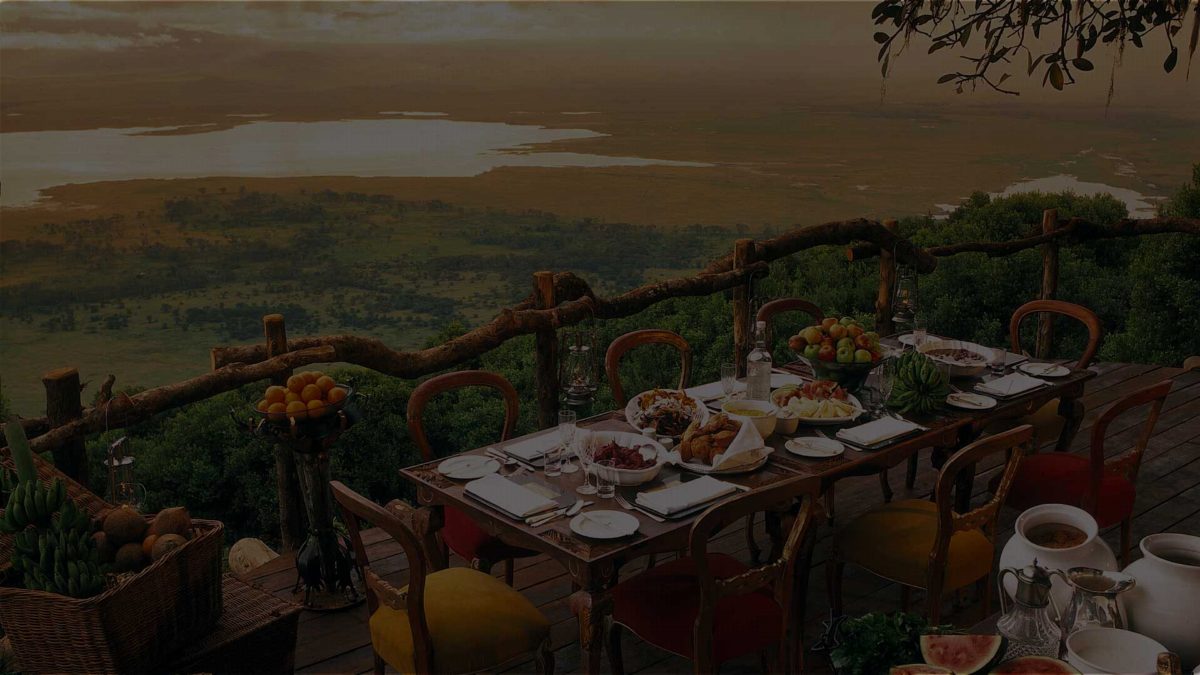
The drive down the western road takes about twenty minutes, and it is the best possible introduction to the place. The forest thins out, the rim drops away behind you, and the whole floor opens up below. You can see the soda lake glinting in the middle and dark specks of buffalo scattered across the grass. From up there it looks like a diagram of an ecosystem.
Down on the floor you are in a closed world. Lake Magadi holds flamingo in numbers that vary. The Lerai forest holds elephant, mostly old bulls with heavy ivory. The open grassland carries wildebeest, zebra, and Thomson's and Grant's gazelle, along with the lions that live off them.
Black rhino are here. You are most likely to see them early in the morning out toward the Gorigor swamp, at a distance, through binoculars. If anyone promises you a close rhino sighting, they are promising something they cannot deliver.
Vehicles have to be off the crater floor within six hours, and back up on the rim by six in the evening. That one rule shapes the whole day: down early, a picnic lunch by the hippo pool, and back up the eastern road in the early afternoon.

The crater does not have a season in the way the Serengeti does. Animals do not arrive and leave. The walls are steep enough that most of the plains game stays inside all year, so there is no month when the crater is empty.
Three things do change: comfort, light and how busy it is.
From June to October the floor is dry, dusty and pale. The grass is short and you can see a long way. This is also the busiest time of year, and the queue at the descent road is at its longest.
From November to May the floor turns green. The light is better for photographs, the rim is often in cloud early in the morning, and there are noticeably fewer vehicles.
For many people February and March are the best months. The floor is green, the animals are there in good numbers, and the calving herds on the Ndutu plains are close enough to include in the same trip.
April and May bring the heaviest rain. The crater rim is cold and wet, and the lodges up there are genuinely chilly at around 2,300 metres. But the floor stays drivable and the place is almost empty.
One thing you cannot plan for is the flamingos. Numbers on Lake Magadi go up and down with the water level, and nobody can predict them more than a few weeks ahead. If you see a big flock, treat it as luck.
Most trips go down into the crater once, and for most people that is enough. Six hours on a small floor with that many animals gives you more than a full day in most other places.
A second descent makes sense in three cases. You are specifically looking for rhino. You are a photographer who wants different light. Or your first day was rained out.
There is one mistake worth avoiding. The Ngorongoro Conservation Area and the crater are not the same thing. The conservation area covers about 8,300 square kilometres, and the crater is roughly three per cent of it.
The rest is good to know. There are two more craters, Olmoti and Empakaai, and you can walk in both with a ranger. There are the Ndutu and Salei plains in the south-west, which is where the calving happens. And there is Olduvai Gorge, on the road to the Serengeti.
This is also the one place on the northern circuit where people and wildlife share the land by law. Maasai families graze cattle inside the conservation area, which is why you will pass homesteads and herds on the rim road.
You will often be offered a visit to a boma. This is a commercial arrangement, and it is best treated as one. Agree what is paid and to whom before you go, not awkwardly afterwards.
If you have a spare day and reasonable legs, Empakaai is the quiet option. It is a steep walk down through forest to a crater lake edged with flamingos, and you can see Ol Doinyo Lengai from the rim.
The crater rim sits at about 2,300 metres, and the lodges up there are cold at night all year round. Bring a proper fleece or a down layer. Several of the older rim lodges have no heating beyond a hot-water bottle in the bed.
The roads are one-way. You go down the western road and come up the eastern one. Your six hours on the floor start the moment you pass the descent gate.
There are no toilets on the crater floor except at the picnic site by the hippo pool, so plan for that. Do not get out of the vehicle anywhere else. It is against the rules, and with buffalo and lion on open ground it is also good sense.
Crater entry is charged separately from the conservation area entry fee. It is charged per vehicle as well as per person, and it is set by the NCAA, not TANAPA. It is the largest daily fee on the northern circuit, which is why adding crater days noticeably increases the cost of a trip.
You can buy fuel at Karatu on the way in and at the rim, but not reliably inside. Sensible operators fill up before the gate.
A working coffee farm on the eastern slopes of the Ngorongoro highlands, used as a base between the crater…
Tell us how long you have and we will build an itinerary around it.