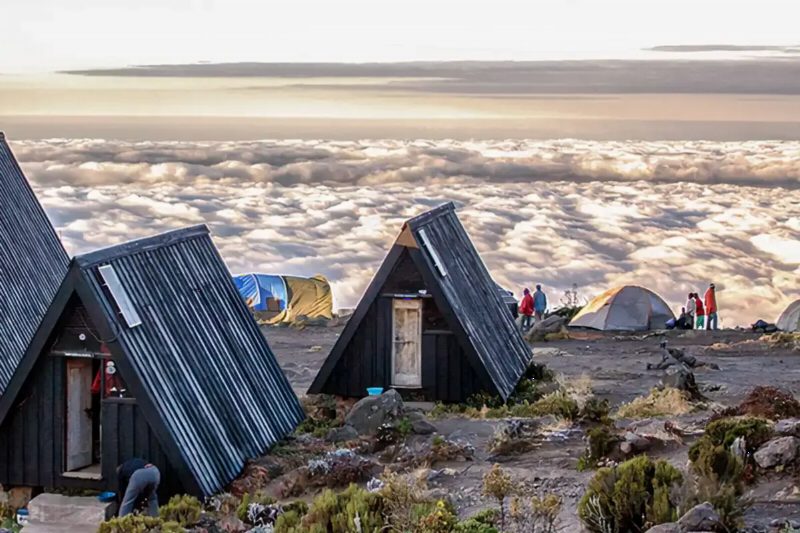
Marangu Route — 5-Day Kilimanjaro Trek
Places Kilimanjaro
Known as the “Coca-Cola” route, the Marangu route is a classic trek on Mount Kilimanjaro. It is the…
Seven routes to Uhuru Peak, from five days on Marangu to nine on the Northern Circuit. The longer the route, the better you acclimatise and the more likely you are to summit.
Places Kilimanjaro
Known as the “Coca-Cola” route, the Marangu route is a classic trek on Mount Kilimanjaro. It is the…
Places Kilimanjaro
The Marangu route is one of the most popular routes to the summit of Kilimanjaro.
Places Kilimanjaro
Six days on the Machame route, camping throughout. The shortest Machame itinerary, with a steeper daily…
Places Kilimanjaro
Seven days on Machame, with the Barranco to Barafu leg split over two days, so the day before the summit…
Places Kilimanjaro
The Rongai route is the only route that approaches Kilimanjaro from the north, close to the Kenyan…
Places Kilimanjaro
Eight days on the Lemosho route, starting in rainforest on the mountain's western side, with the longest…
Places Kilimanjaro
Nine days and about 98 km, right round the quiet northern side of Kibo. The longest route on Kilimanjaro…
Dry Shoulder Green Long rains
One of the two best months. Warmer than the northern-summer season, quieter on the trail, and more likely to give snow on the summit, which most people find makes the summit morning better.
The other pick of the year. Clear, relatively warm, and quiet. Many guides prefer January to mid-March over the busier June-to-October window for exactly these reasons.
Good in the first half, deteriorating in the second as the long rains approach. Book the early part of the month, not the end.
The long rains. The forest zone is genuinely miserable, the Barranco rock is slick, and the summit is usually in cloud. Prices fall sharply. Not a sensible first climb.
Still the long rains and still not recommended for a first attempt. Experienced trekkers who don't mind wet forest will have the mountain close to themselves.
The dry season opens. Conditions improve through the month, the trail isn't yet crowded, and nights begin to get properly cold.
Dry, clear and busy. Machame and Marangu carry serious traffic. If you want space in this window, take Rongai or Lemosho.
The busiest month on the mountain. Excellent conditions and the coldest nights of the year. Book several months ahead, and further for dates near a full moon.
Dry, clear and slightly quieter than August. One of the strongest months overall.
The last of the main season. Good conditions early, with the short rains arriving toward the end of the month.
The short rains, usually afternoon showers, not all-day rain. Often perfectly climbable and much quieter. Rongai, on the mountain's dry northern side, is the sensible route this month.
Variable early and busy late. The first three weeks are quiet and often fine. The holidays fill the trail and the rates rise.

Seven routes are offered here, and the choice comes down to four questions.
How many days do you have? This matters more than anything else, because days on the mountain decide who reaches the summit. Eight-day Lemosho gives the best odds of any route here. Seven-day Machame is the usual recommendation. Five-day Marangu has by far the lowest success rate on the mountain.
Will you camp? Marangu is the only hut route on Kilimanjaro, with dormitory bunks, a dining hall and a roof. Every other route is tents the whole way. In the wetter months that is a big difference.
How do you feel about scrambling? The Barranco Wall on the southern routes is an hour of climbing with your hands on a good path, with no equipment needed. Most people call it the highlight of the route. Marangu and Rongai have nothing like it.
Do you want quiet? Rongai is the only northern approach and carries a fraction of the traffic. It also sits in the mountain's rain shadow, which makes it the sensible choice in the wetter months.
Do not choose on price. A failed climb costs more than the extra day would have.
Altitude decides who reaches the summit, not fitness. Marathon runners fail on five-day schedules. Ordinary, reasonably fit people in their sixties reach the top comfortably on eight-day ones. The number of nights you spend going up is the thing that matters.
Walk slowly. "Pole pole" is the method, not a pleasantry. A pace that feels absurdly slow at 3,000 metres is the pace that keeps you walking at 5,500.
Drink three to four litres a day, whether or not you feel thirsty. Being dehydrated looks exactly like altitude sickness, and it makes the real thing worse.
The warning signs are headache, nausea, dizziness, loss of appetite and breathlessness while resting. Tell your guide straight away instead of pushing through. Guides are trained to judge this, and they cannot judge what you hide. Going down is the only reliable treatment, and turning back is a decision, not a failure.
Talk to your own doctor about any medication, including acetazolamide, well before you travel. Not to a guide, and not on the mountain.
Most people on the mountain have never climbed a mountain before. Beginners do well on the longer routes, because the nights going up matter more than the experience.

TANAPA sets the park fees. They are charged per person per day, and they are the largest single part of the price of any climb. They are identical for every operator. So two quotes differ only in what is left after the fees, and that money pays the crew.
A quote well below the others is being funded by somebody. On this mountain it is usually the porters, through lower wages, heavier loads, or simply fewer of them. You can see it on the trail.
Tipping is customary, and it is a real part of what the crew earns. Guideline totals are discussed at the briefing. Bring cash in small notes, because there is no cash machine on the mountain or at the gate.
There are two climbing seasons. January to mid-March is warmer and quieter, with a better chance of snow on the summit. June to October is the driest and the busiest. Mid-March to May is the long rains, and not a sensible first climb. November and December are the short rains, and usually perfectly climbable.
Check the moon. Summit nights near a full moon are noticeably easier, and those dates book out.
Kilimanjaro quotes are usually all-inclusive from the moment you are collected to the moment you are dropped off. It helps to know what is in them, because it explains why the prices sit where they do.
Normally included: airport transfers, hotel nights in Moshi before and after the climb, all park and camping or hut fees, rescue fees, a licensed guide and assistant guides, a cook and porters, all meals on the mountain, drinking water, group camping equipment including tents and a mess tent, and a summit certificate.
Normally excluded: international flights, the visa, travel insurance that covers trekking to 6,000 metres, personal equipment, tips for the crew, drinks and meals in Moshi outside the included nights, and any hire gear.
Park fees are the largest single item and they are identical for every operator. The rest differs, and the rest pays the crew.
Insurance is the one people get wrong. A standard travel policy often stops covering trekking above 4,000 or 5,000 metres. Check the altitude limit specifically. Do not assume.

Training helps, but not in the way most people expect. Kilimanjaro is not a test of cardiovascular fitness. It is a long walk at an altitude where fitness has only a limited effect on how well you adapt.
The training that transfers is walking. Long days on your feet, on hills, in the boots you will climb in, carrying the daypack you will carry. Six to eight hours of hill walking with a loaded pack prepares you far better than an hour on a treadmill.
Break your boots in properly. New boots are the most common self-inflicted injury on the mountain, and they are entirely avoidable.
Practise with your kit. Know how your layers work, how your head torch fits over a hat, and how to drink from a bladder without stopping.
See your doctor before you book, not after. Talk about altitude, any medication including acetazolamide, and any existing condition. That conversation belongs at home, not on the mountain.
And be honest with yourself about the schedule. If you are choosing a short route to save money, the money is better spent on the extra day.

Mount Meru stands in Arusha National Park. At 4,566 metres it is Tanzania's second mountain and the fifth highest in Africa, and a fraction of the people who climb Kilimanjaro climb it.
The standard route takes three or four days from the Momella gate. You sleep in huts, not tents, and an armed ranger walks with you the whole way, because the lower forest holds buffalo and elephant. The first hours of day one are genuinely a walking safari, and giraffe and colobus are often seen from the path.
Summit day starts around two in the morning. The path follows a narrow ridge, the rim of Meru's own collapsed crater, with a big drop on one side, and you reach the top for sunrise with Kilimanjaro floating above the cloud to the east. It is more exposed than anything on Kilimanjaro's standard routes. If you are uneasy with heights, this is not your mountain.
Many people climb Meru to get used to the altitude before Kilimanjaro, and that makes good sense. Three or four days up to 4,566 metres is real altitude. Leave a rest day between the two.
April and May make the ridge unpleasant and sometimes dangerous. June to February is the practical window.
Kilimanjaro needs less lead time than a migration safari, but more thought about the calendar.
July, August and September on Machame and Lemosho fill up several months ahead, and the dates around a full moon go earlier still. January to March usually has better availability in similar conditions.
Allow time on either side. A night in Moshi before the climb and one after are standard, and worth having. A rest day before a safari or a flight home does more for you than most people expect.
If you are combining a climb with a safari, climb first. Coming off the mountain is exhausting, the safari is the gentler half, and if the climb runs a day over it eats into a safari day instead of a flight.
Check that your insurance covers trekking to the maximum altitude of your route. Standard policies often stop at 4,000 or 5,000 metres, which does not cover Uhuru Peak.
And see your own doctor before you book, not after, especially about altitude and about any existing condition.

TANAPA sets the park fees for Kilimanjaro: a conservation fee per climber per day, camping or hut fees per night, a rescue fee, and a charge for every guide and porter who enters the park. The fees are identical for every operator, and they rise with every day you add to the route.
So an eight-day Lemosho costs more than a six-day Machame mostly because of fees, not because of margin. And it means there is a floor below which a legitimate climb cannot be sold.
Below that floor, the only thing left to cut is the crew's pay. A quote well under the others is being funded by the porters, through lower wages, heavier loads or fewer of them, and you can see it on the trail.
So compare the route and the days first. Then the crew ratio. Then everything else. A quote that itemises the park fees is telling you something. A single number with no breakdown is not.
Add a day, swap a park, upgrade the lodges, travel in a different month. Tell us what you want and we will rebuild the itinerary around it.