Safaris
Kilimanjaro
Destinations
Experiences
Travel guide
About
Contact Call +255 764 006 061 Plan Your Safari
Journal · · 7 min read

Where to Stay in the Serengeti

Region matters more than star rating, and the difference between inside and outside the park is an hour of your morning.

Last updated
Two decisions matter far more than the star rating on a Serengeti camp: which region it sits in, and whether it's inside the park.

Region first

The Serengeti is very large. A camp in the centre during a northern crossing season means hours of driving before the day begins, and by the time you arrive the morning is gone. Decide what you want to see, work out which region that puts you in, and only then look at properties.

If your dates are fixed and you can't chase the herds, base centrally. Seronera works in any month.

Inside or outside

Accommodation immediately outside a park gate is cheaper, because park fees are charged per night inside. You pay for that saving with the drive in each morning. Often an hour, at exactly the time when the light is best and the animals are most active.

For one or two nights in the Serengeti specifically, we would nearly always recommend paying to be inside. It is the clearest example on the whole northern circuit of a cost that buys something concrete.

Permanent lodges versus mobile camps

Permanent lodges and tented camps stay in one place year-round. They tend to have more infrastructure, such as solid buildings, reliable power and sometimes a pool, and they're the sensible choice for the central region where the game doesn't move.

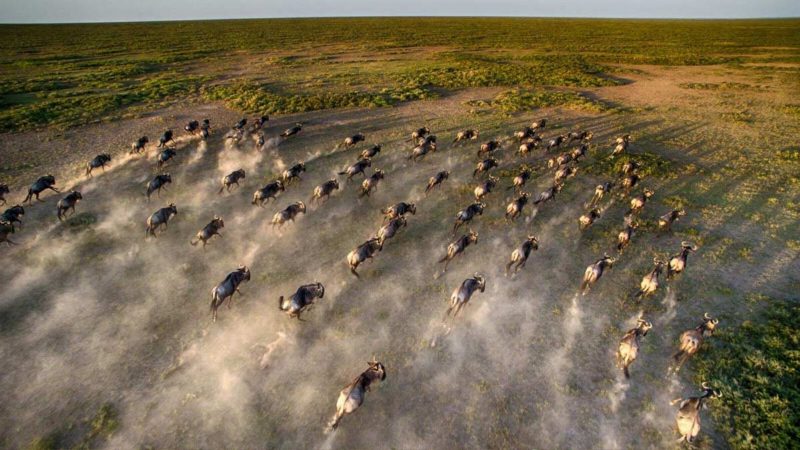
Mobile camps relocate through the year to follow the migration, typically moving between the southern plains and the north. During calving or the crossing season they put you where the animals actually are, not an hour's drive away. They are simpler than a permanent lodge and generally not cheap, and for a migration-focused trip they're usually the strongest option available.

Public campsites inside the park are the budget end. Facilities are basic and shared, nights are cold, and the sites are unfenced. That is either the drawback or the whole appeal, depending on the traveller.

Booking timing

Camps inside the park have limited capacity and genuinely fill months ahead for the peak months. This is the main practical reason we ask for dates early. If a property is full we'll say so and propose the nearest equivalent. We won't quietly substitute something weaker.

Where to spend if the budget is finite

Upgrade the Serengeti nights before anything else. A better-sited camp here changes the trip more than an upgrade at Manyara or on the crater rim, because this is where you'll spend the most time actually looking for wildlife.

Itineraries

Safaris we run

All safaris
Guests on a lodge terrace with sofas and lanterns, looking out across a green valley at dusk.
By region

Which part of the park to base yourself in

The Serengeti is around 14,750 square kilometres and its regions are a full day's drive apart, so where you sleep isn't a detail. It's the single decision that most affects what you see.

Central Serengeti, around Seronera, is the default and the right answer whenever your dates are fixed. The river holds water year-round, which supports a resident prey base and one of the densest big-cat populations in Africa, whether or not the migration is anywhere near. It also has the widest range of accommodation, from public campsites to expensive permanent lodges, and the easiest access by road and air.

Northern Serengeti, around Kogatende and Lamai, is the crossing-season choice from roughly July to October, and it's very quiet outside that window. Camps here are mostly seasonal and mobile.

Southern plains and Ndutu are the calving-season choice from December to March, with off-road driving permitted in parts because much of the area sits inside the conservation area.

Western corridor is the quiet specialist option: green, wooded, with colobus along the rivers and a brief Grumeti window in late May and June.

A table set for dinner beside a campfire in the bush.
Types

Camp types, and what each is for

Public campsite
Basic, communal, inside the park. Shared ablution block, dome tents pitched by your crew, unfenced. The cheapest way to be inside the boundary at dawn, which is the thing that matters most.
Special campsite
Allocated to one group at a time with no facilities, so more private than a public site. Used by mobile operations.
Mobile camp
Set up for a season and struck afterwards, which lets it sit where the herds actually are. Walk-in tents, proper beds, bucket showers, no mains power. The right choice in the migration months.
Permanent tented camp
Canvas on a fixed frame with en-suite bathrooms and hot water. The most common mid-range and upper option inside the park.
Lodge
A building, usually larger, sometimes on the park edge. More facilities, less atmosphere, and often a longer drive to the first sighting.
The choice that matters more than the category is whether it's inside the park boundary. A lodge outside the gate costs you the first hour of light every day.
A four-poster bed on a raised wooden deck under a thatched frame, open to the bush beyond.
Planning

Position, and why it beats comfort

If you take one thing from this article, take this: how far your camp is from where the animals are matters more than what your room looks like.

The first hour after dawn is the best hour of the day. Cats are still moving, the light is at its best, and the ground is cool. A camp inside the park puts you into that hour within minutes of waking. A lodge forty minutes outside the gate means you arrive after it has gone, every single morning of the trip.

The same applies to region. A luxurious lodge in the central Serengeti in September, while the herds are on the Mara, is a comfortable place to be in the wrong part of the park. A simple mobile camp in the north that week is the better trip by a wide margin.

Concession fees mean camps inside the boundary cost more, and that's what you're paying for.

The practical questions to ask before booking any Serengeti camp: is it inside the park, which region, how many tents, and, in the north, which side of the Mara River. The last one is rarely volunteered and matters most.

A guest in a white robe looking through binoculars over a breakfast table laid with fruit and juice.
Practical

Questions to ask before booking a camp

Five questions settle most of it, and none of them concerns the decor.

Is it inside the park boundary? A camp inside puts you into the first hour after dawn, which is the best hour of the day. A lodge outside the gate costs you that hour in each direction, every day.

Which region, and is that where the animals will be for my dates? A comfortable lodge in the centre in September, while the herds are on the Mara, is a nice place in the wrong part of the park.

How many tents or rooms? Smaller means fewer vehicles leaving together each morning.

Permanent or mobile? Mobile camps are struck and rebuilt seasonally so they can sit where the herds are, which in the migration months matters more than the building does.

And in the far north, which side of the Mara River? Being on the northern side means you aren't dependent on a bridge to reach a crossing point. It is the most consequential detail there and it's almost never volunteered.

The veranda of a tented camp under canvas, looking out over bush and hills.
Planning

A shape that works for most trips

For a first Serengeti visit with fixed dates, three nights in the central region around Seronera is the shape that most reliably works. The river valley holds resident lion, leopard and cheetah in every month, the accommodation range is the widest in the park, and access by road and air is the easiest.

For a migration trip, split it. Two nights in the centre and three in the region the herds are actually in. Ndutu from December to March, the far north from July to October. That gives you resident game as insurance and the herds as the main event.

For a longer trip, add the western corridor or the far north as a third region, not a second, and fly at least one leg.

Whatever the shape, avoid one-night stops. The arithmetic is unforgiving: a one-night stay is an arrival afternoon and a departure morning, with a transfer at each end.

And book the region before the camp. Being in the right part of the park matters more than the standard of the tent.

Tables laid for dinner around a campfire in the bush at dusk, a safari vehicle parked behind.

Booking windows

The good camps in the right place fill earlier than people expect, and they fill from the peak outwards.

The busiest stretch is the dry season and the weeks either side of it, and the camps that are well positioned for the migration go first. Small camps have very few tents, so it doesn't take many bookings to close one out.

If your dates are fixed, book the camps before anything else and build the rest of the itinerary around what you get. If your dates are flexible, ask what's open before you settle them.

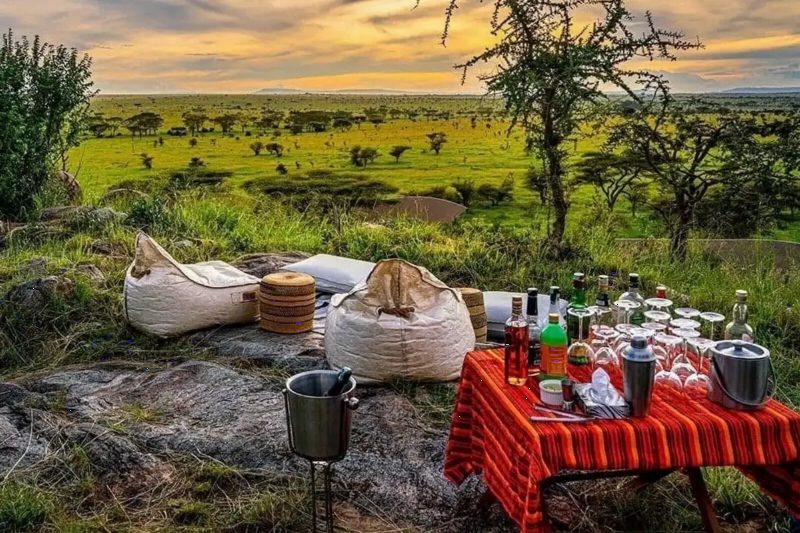
A bush picnic laid on a red cloth on the grass, with a wine cooler and cushions under the trees.
In short

The short answer

Inside the park boundary, in the region the animals will be in for your dates, in the smallest camp you can afford. Position beats comfort, and in the far north it matters which side of the Mara River you're on.

More from the journal

Keep reading

All stories

Journal

Altitude on Kilimanjaro

Altitude, not fitness, stops most people. The way acclimatisation is managed on the mountain, and why this article…

Talk to a safari expert on WhatsApp (opens in a new tab)