Ngorongoro Conservation Area
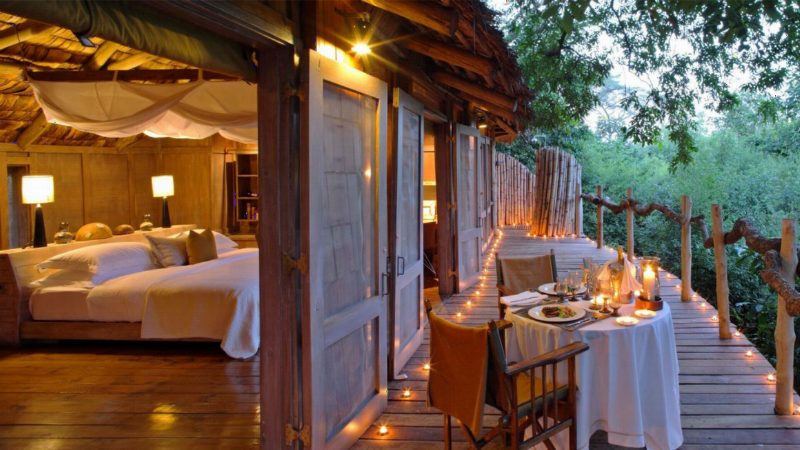
Gibb's Farm
A working coffee farm on the eastern slopes of the Ngorongoro highlands, used as a base between the crater and Lake…
Accommodation is matched to the itinerary and to what you want to spend. These are properties we use regularly across the northern circuit.
Ngorongoro Conservation Area
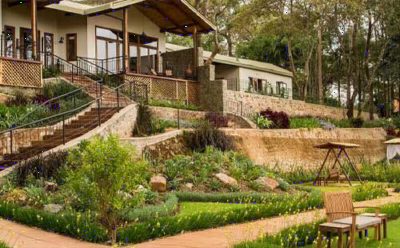
A working coffee farm on the eastern slopes of the Ngorongoro highlands, used as a base between the crater and Lake…
Lake Manyara National Park
Set on the rim of the Rift Valley escarpment with views over Lake Manyara and the park below.
Lake Manyara National Park
Perched above the Rift Valley wall, overlooking Lake Manyara National Park.
Ngorongoro Conservation Area
A lodge in the Karatu area, within reach of the Ngorongoro Crater gate.
Not the only options — we match lodges to your budget and the season. Ask us for alternatives.
Two people can take the same route through the same parks in the same week and pay very different amounts, and the difference is almost always where they sleep. It is worth understanding the tiers before you compare quotes from any operator.
Camping uses public campsites inside or beside the parks, with tents and meals prepared by the crew. It is the cheapest way to do a Tanzanian safari and puts you closest to the sounds of the place at night. Mid-range means permanent lodges or tented camps with private bathrooms and electricity — comfortable, unremarkable, and where most trips sit. Luxury covers smaller camps and lodges with better siting, better food and more staff per guest; the premium buys privacy and location more than square footage.
Availability inside the parks is genuinely limited in peak months, which is the main reason we ask for dates early. If a property is full we will say so and propose the nearest equivalent rather than quietly substituting something weaker.

Position matters more than comfort, and it's the thing most people weigh last.
A camp inside a park boundary puts you on a game drive within minutes of waking. A lodge outside the gate costs you the first hour of daylight in each direction, every day of the trip. The first hour after dawn is the best hour there is. Over a week that's a substantial part of what you came for.
The second question is permanent or mobile. Permanent lodges and camps stay in one place all year. Mobile camps are set up for a season and struck afterwards, which lets them sit where the herds actually are. In the migration months a well-placed mobile camp beats a more comfortable permanent lodge in the wrong region.
The third is size. Smaller camps mean fewer vehicles leaving from the same place each morning and fewer people at dinner.
Comfort level, public campsite, mid-range lodge or luxury camp, changes where you sleep and how you wash. It doesn't change the parks, the vehicle, the guide, the hours or the animals.

If the budget will stretch some of the way but not all of it, spend it unevenly.
Spend it in the Serengeti. You will spend the most nights there and it's where camp position most affects what you see. The gap between a lodge on the park edge and a well-sited camp inside it's at its largest here.
Spend it on a mobile camp in the migration months, for the same reason.
Do not spend it on the Ngorongoro crater rim. The crater day is governed by the descent gate and the six-hour rule regardless of where you slept, and rim lodges charge a big premium for the view. Karatu, forty minutes below, costs much less and changes almost nothing about the day.
Do not spend it in Arusha. The first and last nights are transit nights and you'll be asleep for most of them.
Consider an extra night instead of a better room. An extra night where you already are costs accommodation and park fees but no transfer day, and more time in the right place beats a nicer building in it.
Power is limited inside the parks at every price point. Most camps run on solar with restricted charging hours and no mains supply. There are no hair dryers, and a 12v power bank charged in the vehicle is more useful than another adapter.
Mobile coverage is patchy and mostly absent away from Seronera. Camps advertising wifi generally mean a slow shared satellite connection in the main tent.
Water is heated by solar or by a boiler with a schedule, so hot showers have a window. They are not on demand.
Most camps inside the parks are unfenced. Animals move through at night, which is normal and safe provided you stay in your tent after dark and are escorted between the tent and the mess after sunset.
The crater rim sits at around 2,300 metres and is cold at night all year. Several rim lodges have very little heating.
Cards aren't usable in the parks. Bring cash in small denominations for tips and extras.


Small, well-sited camps fill early, and that's the practical constraint that catches people out more than budget does.
Mobile camps in the northern Serengeti for August and September fill roughly twelve months ahead, and so do the Ndutu camps for February. If your dates are fixed and you are travelling for one of those seasons, book about a year out.
Christmas and New Year fill early across the whole circuit, and rates over that fortnight are the highest of the year.
June and July fill next. April, May and November have availability much later, and that's where the value is.
Balloon flights over the Serengeti have limited capacity and sell out in the high season. Book them with the camps, not on arrival.
If your dates have any flexibility, ask what's available before fixing the route. A week either side can be the difference between the camp you want and a compromise, and camp position affects your game viewing more than most other variables.

Five questions settle most of what matters about a place to stay, and none of them is about the decor.
Is it inside the park boundary? A camp inside puts you on a game drive within minutes of waking. A lodge outside the gate costs you the first hour of daylight in each direction, every day of the trip.
Which region? A comfortable lodge in the central Serengeti in September, while the herds are on the Mara, is a nice place to be in the wrong part of the park.
How many rooms or tents? Smaller means fewer vehicles leaving at the same time each morning and fewer people at dinner.
Permanent or mobile? Mobile camps are struck and rebuilt each season so they can sit where the animals are, which in the migration months matters more than the building.
And in the far north, which side of the Mara River? Being on the northern side means you aren't dependent on a bridge to reach a crossing point. It is rarely volunteered and it's the most consequential detail there.

Safari prices are quoted per person, sharing a double or twin room. That has a few consequences worth knowing before you compare quotes.
If you travel alone you pay a single supplement, and on safari it can be large, because the room is the biggest per-person cost after park fees. Some camps waive or reduce it in low season, so ask about that specifically.
Three adults sharing is usually possible but rarely comfortable, and many camps simply have no triple rooms.
Rates for children and family units vary enormously from camp to camp. Some have connecting rooms or dedicated family tents. Others have neither, and set a minimum age instead. Sort this out before you choose a camp, not after.
Camps set their own minimum ages, not us. In unfenced areas the limit is commonly six or twelve.
Whether you get a double bed or twin beds is a request, not a guarantee, at most camps. Say which you want when you book, not when you arrive.

Lodge descriptions are written to sell, and they're mostly accurate. The useful information is in what they don't say.
"Close to the park" can mean ten minutes or an hour. "Views over the valley" tells you nothing about which rooms have them. Ask directly what "traditional bathroom facilities" means.
The three questions that matter most are how long the drive to the gate takes in the morning, how many rooms there are, and whether the price you've been quoted includes park fees. Ask those and the description sorts itself out.

Inside the park boundary, in the right region for your dates, in the smallest camp your budget allows. Position beats comfort every time.