
Western Corridor
The Grumeti River and the quieter crossings
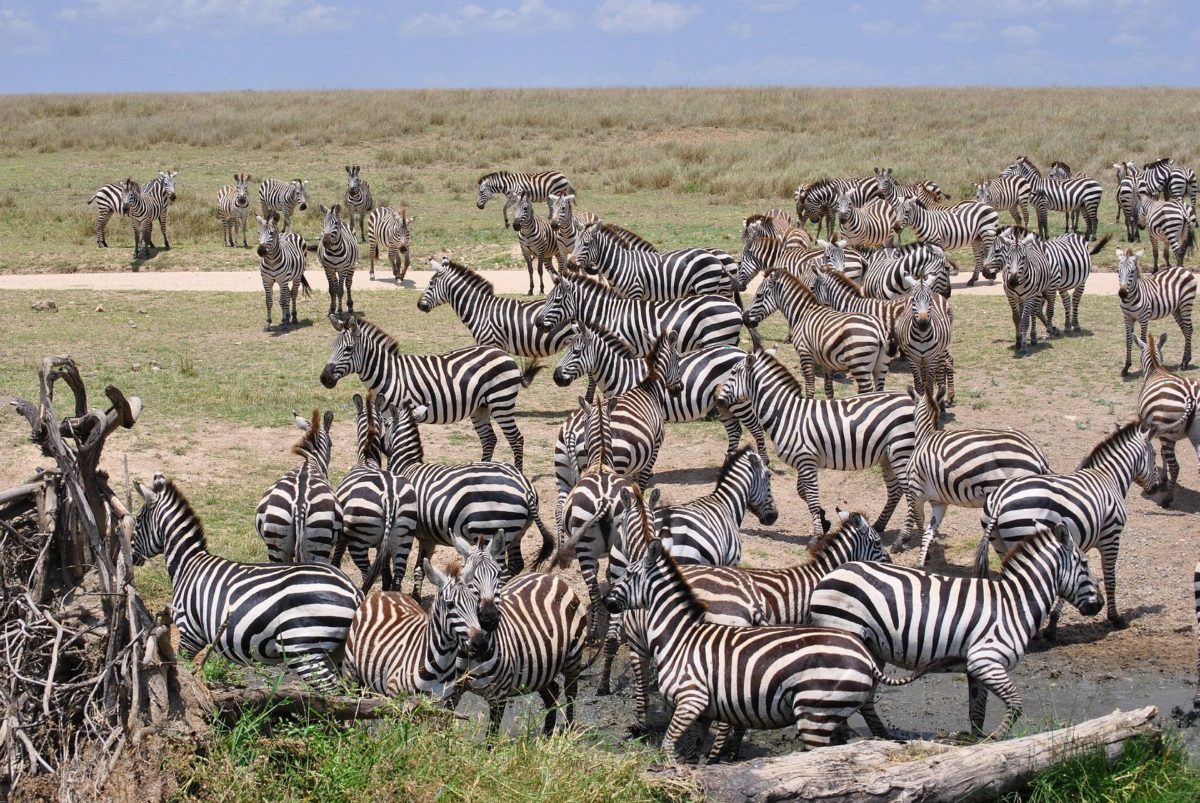
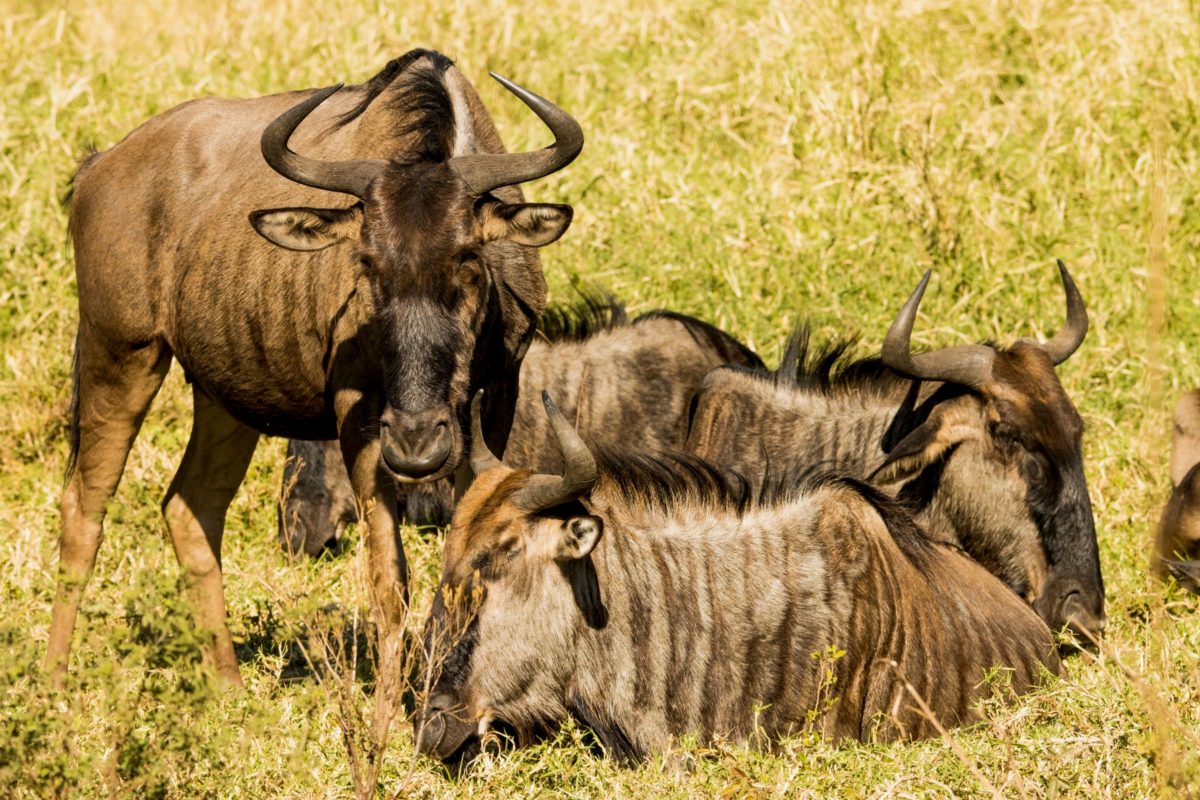

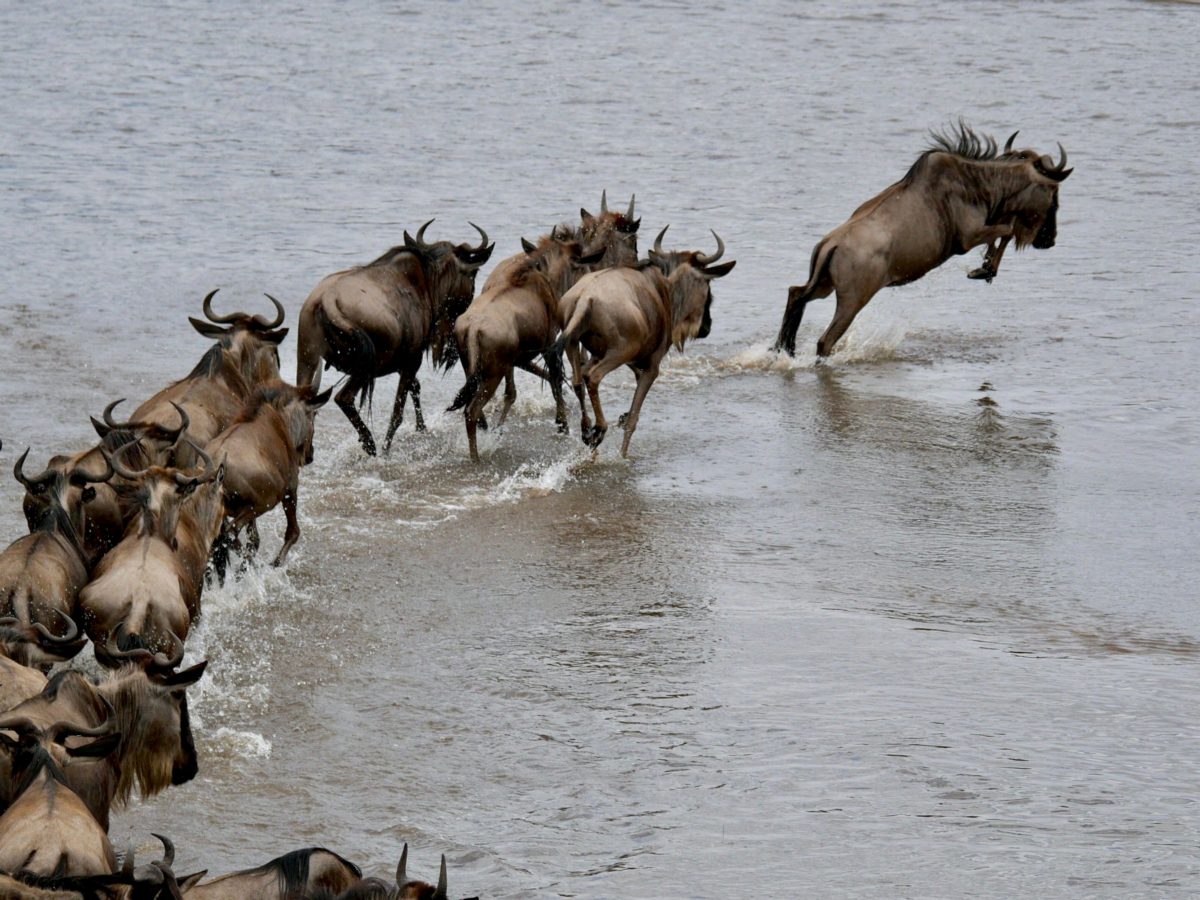


The Western Corridor is a narrow arm of the park extending toward Lake Victoria, following the Grumeti and Mbalageti rivers. The country is different again. There is riverine forest, black-cotton plains that turn heavy after rain, and denser bush than the open plains to the east.
It is the least visited of the Serengeti's regions, and for part of the year it's where the migration is.
Why visit Western Serengeti
The herds usually move through the corridor around the middle of the year, on the way from the southern plains to the north. Where they meet the Grumeti there are crossings, and the river holds some notably large crocodiles.
These crossings are smaller and far less publicised than the Mara crossings later in the year, and that is exactly their appeal. The same event with a fraction of the vehicles. The trade-off is that the timing is, if anything, harder to predict than the Mara, and the corridor is a long way from the main airstrips.
Outside the migration months the west is quiet, with reasonable resident game and very few visitors. It suits a longer trip, not a first Serengeti visit.
Practical notes
Wildlife
Migration herds passing through around mid-year. Very large Nile crocodile in the Grumeti, and hippo throughout. Resident giraffe, buffalo, impala, topi and eland. Colobus monkey in the riverine forest, which is unusual for the park. Lion and leopard are present. The denser bush makes them harder to find than at Seronera.
What to do there
Game drives, and river-crossing viewing when the herds are moving through.
Getting there
By road west from Seronera, which is slow, or by light aircraft to one of the corridor airstrips. Black-cotton soil makes some tracks difficult after heavy rain.
Best time to visit
Roughly May to July, when the herds move through on the way north. Quiet the rest of the year.

The corridor, the Grumeti, and a quieter Serengeti
The western corridor is the arm of the Serengeti that reaches out toward Lake Victoria, following the Grumeti and Mbalageti rivers. The country looks and feels quite different from the rest of the park. There is more woodland, more black cotton soil, more hills, and far fewer vehicles.
The Grumeti river is the centrepiece. It holds a population of very large Nile crocodile. These animals spend most of the year barely moving in the deep pools, then feed heavily when the herds arrive. The crossings here are smaller, shorter and much less predictable than the Mara crossings in the north. They are also watched by a fraction of the vehicles.
Away from the river the corridor holds resident animals that genuinely justify the drive. There are good numbers of giraffe, buffalo and topi. The region's speciality is the black-and-white colobus monkey in the riverine forest, which you will not find in the centre or the north. Patas monkey live here too, at the eastern edge of their range.
The corridor also has some of the best birding in the Serengeti, because the forest along the rivers adds species the open plains never produce.
It does not have density. Outside the short migration window this is a quiet park, and quiet in the honest sense. You will drive for long stretches without a major sighting.

A short window, and a long quiet season
The herds are usually in the western corridor from late May into July, moving north-west from the central plains before turning north toward the Mara. Late June is the most likely period for Grumeti crossings in an average year.
That window is short and it's unreliable. The Grumeti is a smaller river than the Mara and the herds can pass it in places where the bank is easy and the drama is minimal. Plenty of years produce no significant crossing spectacle here at all.
Outside that period, which is most of the year, the corridor is a quiet, green, resident-game park. The rains hit the west harder than the rest of the Serengeti, and the black cotton soil turns to a grease that four-wheel drive doesn't always solve. April and May can genuinely close roads here.
August to October is dry, empty and pleasant, with the resident game concentrated on the rivers. December to March is green, quiet and good for birds.
The honest summary is that the western corridor is a specialist's Serengeti. It rewards a traveller on a second or third trip who wants space and doesn't need a guaranteed spectacle. For a first safari with limited days, the centre is the better use of the time.

There are two ways into the western corridor. You can drive west from Seronera, which takes about four hours on rough road. Or you can fly into the Grumeti or Kirawira airstrips, which have scheduled flights from Arusha.
Its position opens up one option nothing else on the northern circuit can offer. It puts you within reach of Lake Victoria.
Some trips finish here instead of driving back east. You spend a night on the lake at Speke Bay or Mwanza and fly home from Mwanza airport. If you want to see the fishing villages and the lake itself, which is the largest in Africa, it makes a very different and much quieter end to a trip.
There are fewer camps in the corridor than in the centre, and most of them are expensive. There are some mid-range tented camps near the Grumeti.
Our advice is simple: give the corridor three nights or skip it. The drive in is long enough that two nights leaves you only one usable full day, and one day in a park with low animal density is a poor bet. With three nights you can work the river properly, spend a full day out toward the Mbalageti, and enjoy the quiet instead of resenting it.
One thing to be aware of. The Grumeti Game Reserve, just to the north-west, is a separate private concession with its own rules and prices. It is not part of the national park, and only guests of its lodges can go in.

The kopjes, the Mbalageti and Ikoma
The corridor rewards a slower pace than most people give it, and there are a few specific places worth aiming at.
The Musabi and Nyasirori plains, in the middle of the corridor, are open grassland that holds resident topi and hartebeest year-round and is largely ignored by vehicles heading through to the river. The Mbalageti river, running along the southern edge of the corridor, has good riverine forest and is generally quieter than the Grumeti.
Kirawira, in the far west, is the classic corridor location. It is a stretch of the Grumeti with deep permanent pools holding some of the largest crocodile in East Africa. Even outside the migration, the crocodiles and the hippo pods make it worth the drive.
The Ikoma area, outside the park boundary to the north-east, is a wildlife management area where night drives and walking are allowed. Neither is allowed inside the national park. Camps there are usually cheaper than their in-park equivalents and offer activities the park can't. The trade-off is a gate drive each morning.
For birders, the corridor's forest patches produce species the plains never will, and the western Serengeti checklist is the longest in the park.
Access and the black-cotton problem
There are two ways into the corridor. You can drive west from Seronera, which takes about four hours on rough road. Or you can fly into the Grumeti or Kirawira airstrips, which have scheduled flights from Arusha.
The practical problem here is black cotton soil. It turns to grease when it gets wet, so roads that are easy in September can be genuinely difficult in April and May. If you are coming in the wet season, build some slack into the plan.
Give the corridor three nights or skip it. The drive in is long enough that two nights leaves you a single usable day, and one day in a park with low animal density is a poor bet.
The Grumeti Game Reserve, just to the north-west, is a separate private concession with its own rules and prices. It is not part of the national park, and only guests of its lodges can go in.
The Ikoma area outside the park boundary allows night drives and walking. Neither is allowed inside the national park, and camps there are generally cheaper.
Visiting Western Serengeti
When do the Grumeti crossings happen?
Is the western corridor worth visiting?
Can you combine the western Serengeti with Lake Victoria?
How long should I spend in the western corridor?
Want Western Serengeti in your trip?
Tell us how long you have and we will build an itinerary around it.