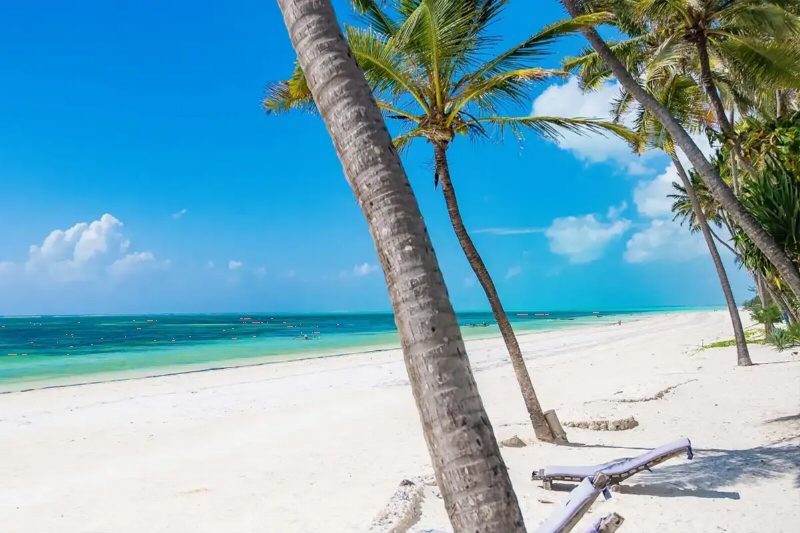
Zanzibar Holidays
Beach time after the parks. Short flights from Kilimanjaro make a combined safari-and-island trip straightforward.
Most people who come to Tanzania for the wildlife end up asking the same question halfway through the trip: what happens after the parks? Zanzibar is the usual answer. The islands sit off the country's east coast, reachable on a short hop from the mainland, and they work well precisely because they ask nothing of you after a week of early starts and long drives.
The pairing is practical as well as pleasant. Flights connect the northern safari circuit with Zanzibar directly, so there's no need to backtrack through Dar es Salaam. The change of pace is complete. You go from dawn game drives to a beach with nothing scheduled.
What you do there depends on where you base yourself. Stone Town is the old quarter of Zanzibar City and a UNESCO World Heritage Site. Give it at least a night for its architecture, its markets and the layers of Swahili, Omani, Indian and European history built into it. The beaches are a separate decision: the north tends to stay swimmable through the tidal cycle, while the east coast has wide sand flats that empty dramatically at low tide and draw kitesurfers when the wind is up. Spice farms, the Jozani forest and dhow trips fill the days for anyone who doesn't want to sit still.
Timing follows the monsoon, not the safari seasons, so the best months for the islands don't always line up with the best months in the parks. Raise that early when you plan, because it sometimes shifts the order of a trip or the length of each leg.
We don't sell Zanzibar as a fixed package. It is arranged around the safari you're already taking. How many nights, which coast, what standard of accommodation. It is quoted with the rest of the trip. Tell us what you've in mind and we'll put the two halves together.

Which coast to stay on
Zanzibar isn't one place, and the coast you choose decides the holiday you get more than the hotel does.
The north, Nungwi and Kendwa, has the smallest tidal range on the island, so you can swim whenever you like. It is also the most developed, with the largest hotels and the most nightlife.
The east, Paje, Jambiani and Bwejuu, has the best sand and a very large tidal range. At low tide the ocean withdraws several hundred metres and the lagoon becomes a shallow flat of seagrass and starfish. It is beautiful, and it means swimming happens on a timetable. Paje is the kitesurfing centre and is young, busy and loud in season.
The south-east and south-west are quieter, with fewer hotels and more villages.
The west, around Stone Town, isn't a swimming coast at all. It's where the history is, and it deserves a night, not an afternoon. Coral-rag alleys, carved doors, and a layered Omani, Indian, Persian and African history that includes the island's central role in the East African slave trade.
If swimming at any hour matters, book the north and stop reading reviews of the east coast's sand.
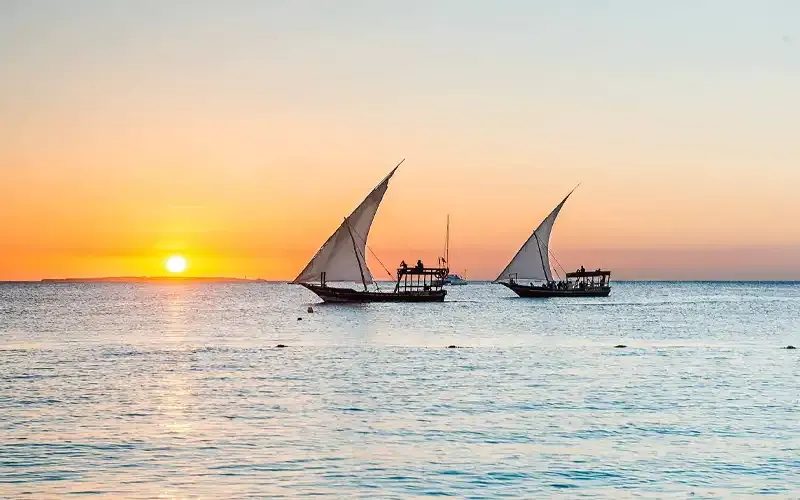
Combining the island with a safari
Safari first, beach second. After a week of early starts and long drives on corrugated road most people are genuinely tired, and the island is the right kind of nothing to finish on. Reversing the order means arriving at the parks already relaxed and ending your holiday on a four-in-the-morning game drive.
The connection is easy. Flights run daily from the Serengeti airstrips and from Arusha and Kilimanjaro to Zanzibar. Roughly an hour and a half from Arusha, a little over two hours with a stop from the Serengeti. Flying beats the long drive back to Arusha followed by a separate transfer, and it usually costs less than the day it saves.
Three nights is the practical minimum once transfer days are counted, and five to seven is where it stops feeling rushed. One of those nights is well spent in Stone Town if the history interests you at all.
Zanzibar is a semi-autonomous part of Tanzania with its own immigration desk, so you pass through a check on arrival even on a domestic flight. Carry your passport.
The rains are heaviest in April and May with a shorter wet spell in November. July to March is the reliable window.
Insurance, dress and the things that catch people out
Zanzibar requires visitors to hold travel insurance covering medical treatment, bought through the designated provider on top of any policy you already hold. This is enforced at the airport and the scheme has changed more than once, so check the current requirement before you fly.
Zanzibar is around 99 per cent Muslim and dress outside hotel grounds matters. Cover shoulders and knees in Stone Town and in villages. Swimwear stays on the beach and in hotel grounds. It is a small courtesy and it's noticed.
Ramadan changes the island a lot. Many restaurants outside hotels close during daylight and Stone Town is much quieter. The dates move each year.
Malaria prophylaxis is generally advised for Zanzibar as well as the mainland. Take medical advice on what's right for you instead of relying on what a hotel tells you.
Tides govern the east coast. Tide tables for your dates are published. Look at them before choosing a hotel, not after.
Cash is useful outside the resorts. Cards work in hotels and rarely anywhere else.
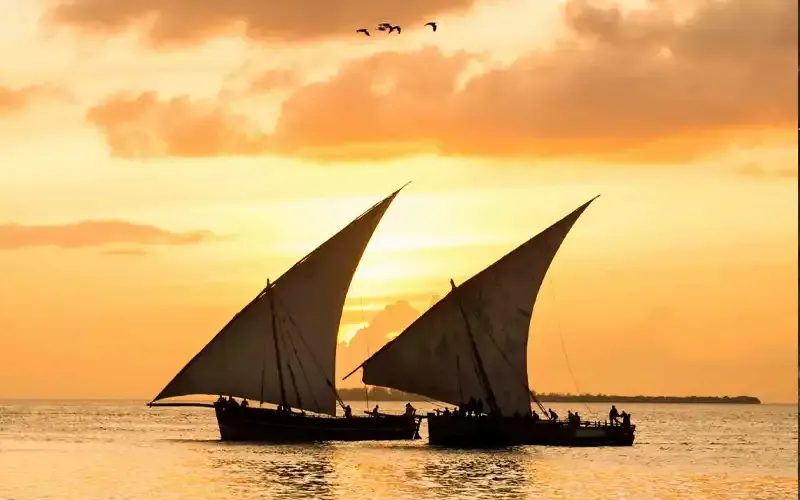
Beyond the beach
Stone Town is the obvious one, and it deserves a night, not an afternoon. You get coral-rag alleyways, carved doors, the Old Fort and the House of Wonders. You also get the former slave market site, with the Anglican cathedral built over it. It is hard to look at, and it is the most important hour on the island.
Jozani Forest holds the Zanzibar red colobus, a monkey found nowhere else on earth. There is also a mangrove boardwalk. It takes half a day and combines easily with a drive to the east coast.
A spice tour is the standard excursion. It is better than it sounds if you go to a working farm instead of a demonstration plot, where cloves, nutmeg, cinnamon, vanilla and pepper are growing, not displayed.
Mnemba atoll is where you go to snorkel and dive. You reach it by boat from the north-east. Reef condition varies, and the marine reserve fee is separate.
Prison Island is a short boat ride from Stone Town. It has a colony of introduced Aldabra giant tortoises, some of them well over a hundred years old.
Safari Blue and similar day sails leave from the south-west. They combine sandbank swimming, snorkelling and a seafood lunch, and they are among the better-value days on the island.

When to go, and what the seasons do
Zanzibar has two rainy seasons and the difference between them matters.
The long rains run through April and May and are the wettest weeks of the year by a distance. Many hotels close in April, boats stop running, and the humidity is heavy. It is much the cheapest time and it's a genuine gamble.
June to October is the dry, cooler season, with reliable sunshine and a steady breeze. This is the peak window and it lines up with the mainland dry season, which is why most combined trips fall here.
November brings a shorter wet spell, usually afternoon showers instead of all-day rain, and it's quiet and good value.
December to March is hot, dry and humid, with February the hottest month. It is the other peak season and it lines up with the calving on the mainland.
Two things move independently of rainfall. Ramadan, whose dates shift each year and which closes many restaurants outside hotels during daylight. And the tides, which govern swimming on the east coast and are published well in advance.
Common questions
Which side of Zanzibar should I stay on?
How many nights do I need?
Do I need travel insurance for Zanzibar?
What should I wear?
Is Zanzibar safe?
Interested in zanzibar holidays?
Tell us your dates and we will put something together.