Safaris
Kilimanjaro
Destinations
Experiences
Travel guide
About
Contact Call +255 764 006 061 Plan Your Safari
Destinations · · 7 min read

Serengeti or Ngorongoro: How They Differ

They are usually visited together, but they're very different places and reward different expectations.

Last updated
Almost every northern circuit itinerary includes both, and they sit on the same road, so in practice this is rarely an either/or. But they're genuinely different experiences and it helps to know which is which before you go.

Scale

The Serengeti is vast. That is its defining quality. The horizon doesn't end, and you can drive for a long time between sightings. The crater is the opposite: an enclosed floor a few hundred square kilometres in area, walled in, with a dense permanent population that can't easily leave.

Reliability versus discovery

The crater is the most dependable game viewing in Tanzania. In a single day on the floor most people see a great deal, including a realistic chance of black rhino, which is difficult almost everywhere else in the country.

The Serengeti is less guaranteed on any given morning and better over several days. It rewards time in a way the crater doesn't, and its best moments tend to be things you found, not things you drove to.

Crowding

The crater is small, popular and has one main descent road, so vehicles concentrate. A good sighting on the floor is often shared. The Serengeti's size absorbs visitors far better. Outside the peak crossing weeks in the north, you can spend long stretches seeing nobody.

Cost

Ngorongoro carries its own conservation-area fees and a separate crater descent charge, which makes a crater day expensive relative to its length. The Serengeti costs more in total simply because you stay longer.

How long each deserves

The crater floor can be covered properly in one day, and most itineraries allow exactly that. A second crater day is rarely the best use of money.

The Serengeti deserves at least two nights and ideally three or more, and it's the part of an itinerary to protect if time gets squeezed.

If you genuinely had to choose

For a very short trip where reliability matters most: the crater. For anything of five days or more, and for anyone who wants the sense of scale that people come to East Africa for: the Serengeti, with the crater added on the way through, which is exactly where the road goes anyway.

Itineraries

Safaris we run

All safaris
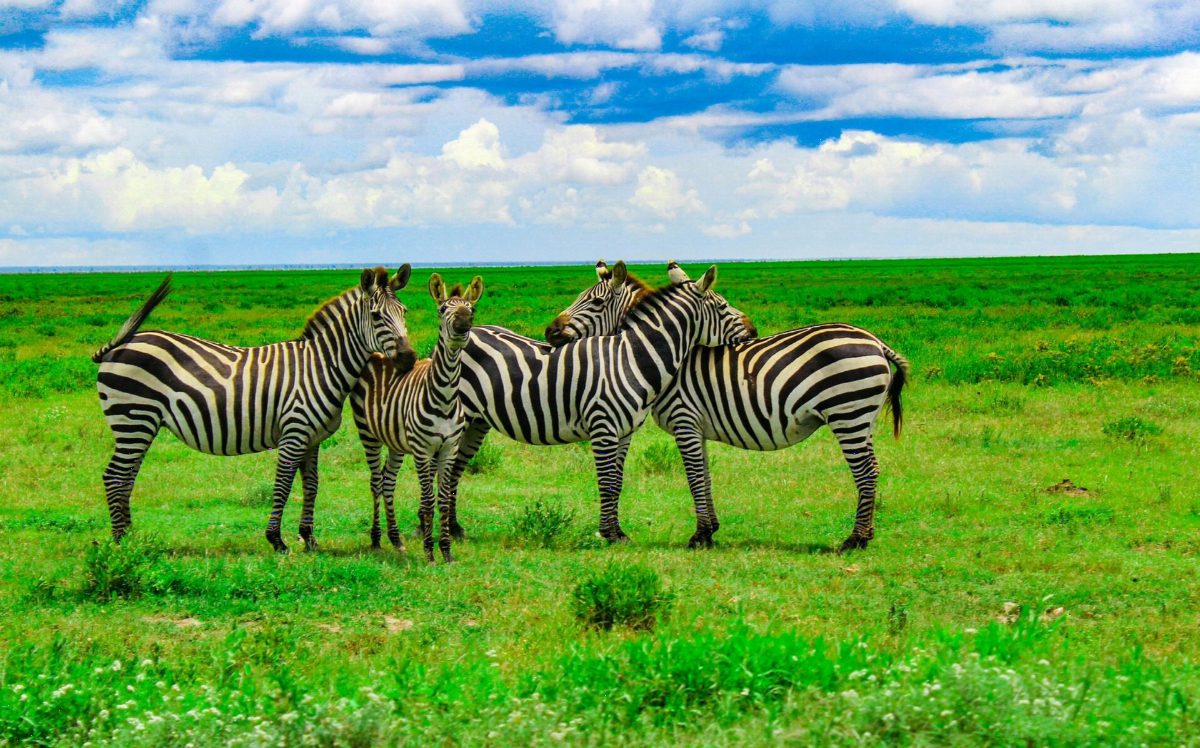
Zebras grazing on a bright green plain under a blue sky.
The short answer

How the two actually differ

They aren't really alternatives, and the framing of the question is the first thing worth correcting: almost every itinerary on the northern circuit includes both, because they're two hours apart and they do completely different things.

The Serengeti is scale. Around 14,750 square kilometres of open plain, woodland and river system, holding an ecosystem that includes the migration. You can drive for an hour without a major sighting, and then find something extraordinary and have it largely to yourself. It rewards time. Two nights minimum, three to be unhurried.

The Ngorongoro Crater is density. A 260-square-kilometre floor inside a collapsed caldera, with steep enough walls that most of the plains game stays put year-round. Game concentration is exceptional and almost guaranteed. It also has a hard six-hour limit per vehicle and it's busy.

So: the Serengeti is where you spend days, and the crater is where you spend one very good one.

If you genuinely have to choose, on a two-day trip say, take the crater, because it delivers reliably in a single day. Anything longer, and the Serengeti is why you come.

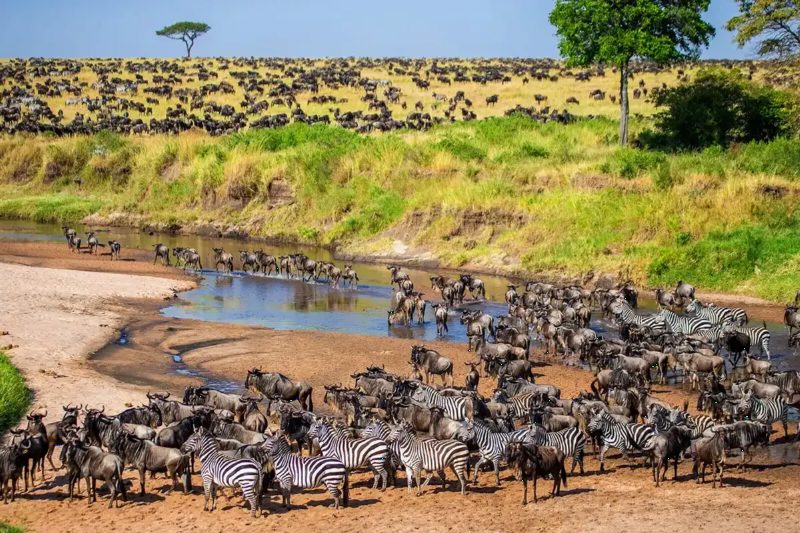
Zebra and wildebeest crowding a shallow pool in a dry riverbed, with more herds on the grass above.
Comparing

The practical differences

Size
The Serengeti covers about 14,750 sq km. The crater floor covers about 260 sq km. That single fact explains most of the rest.
Time needed
The Serengeti needs two to three nights at a minimum. The crater needs one descent, which is six hours.
Reliability
The crater is close to guaranteed for game in any month. The Serengeti depends on the region and the season. The central area holds resident animals all year.
Vehicles
The crater is far busier per square kilometre, especially between eight and eleven in the morning. The Serengeti absorbs vehicles much better.
Rhino
Realistic in the crater, at a distance. Rare in the Serengeti.
Migration
The Serengeti only. The crater animals do not migrate.
Cost
Crater days cost noticeably more, because entry is charged per vehicle as well as per person, by a different authority.
Landscape
The Serengeti is open horizon. The crater is an enclosed world with walls on every side. Doing the crater after the plains makes both feel more distinct.
A herd of elephants crossing green grassland, with a flat-topped hill on the horizon.
Planning

Fitting both into one trip

The standard shape is Serengeti first, crater second, and it's the right way round for a reason that's easy to miss.

After two or three days of open plains and long horizons, dropping down the descent road onto an enclosed crater floor with walls rising on every side is a genuine change of register. Reversed, the crater sets an expectation of density that the Serengeti, a much wilder and more patient place, can't meet, and people come away thinking the Serengeti was quiet.

Geographically it works too. The crater sits between Arusha and the Serengeti, so the drive out passes the rim and the drive back descends into it, which costs no extra transfer.

Give the crater one descent, starting at the six-thirty gate. Being near the front of that queue is the difference between having a lion pride to yourself and sharing it with a dozen vehicles.

Give the Serengeti at least two nights, in one region, without moving. Which region depends on your dates: the centre in any month, the south from December to March, the far north from July to October.

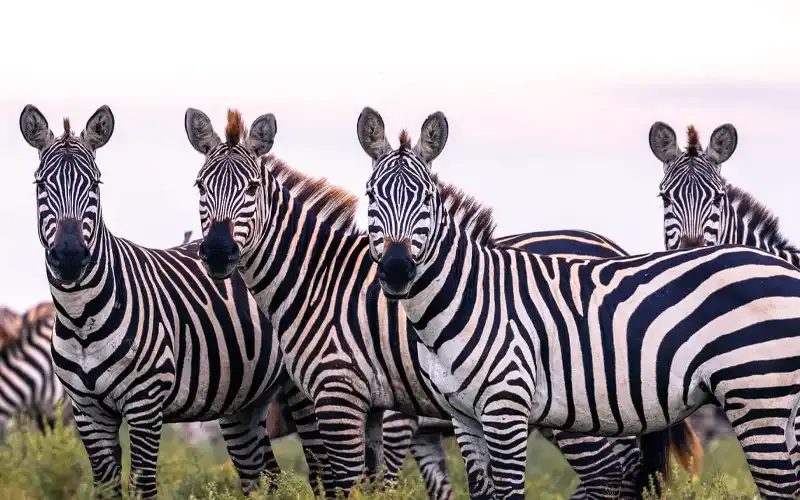
A line of zebras standing close together, looking straight at the camera.
Common mistakes

What people get wrong about these two

The most common mistake is treating the crater as a small Serengeti, and then expecting the Serengeti to give you crater-like density. They are different things. The crater packs a whole ecosystem into 260 square kilometres with walls around it. The Serengeti spreads one across 14,750. A quiet hour in the Serengeti is normal, and it is not a failure.

The second mistake is doing the crater first. After a crater day the Serengeti feels empty. After two or three Serengeti days the crater feels extraordinary. Protect that order.

The third is underestimating the crater's clock. You get six hours on the floor from a gate that opens at half past six, so an early start is not optional. Arriving at nine costs you the two best hours and puts you in the queue.

The fourth is giving the Serengeti one night. That buys you an arrival afternoon and a departure morning, which is not a visit.

The fifth is assuming the crater is the whole conservation area. It is about three per cent of it. Empakaai, Olmoti, Olduvai and the Ndutu plains all sit inside the same boundary.

A lion asleep on a rock, one paw hanging over the edge.
Planning

Giving each the right number of days

A week on the northern circuit usually splits into three or four nights for the Serengeti, one or two in the Ngorongoro highlands, and the rest for Tarangire, Manyara or the road.

The crater takes one day whatever else you do. Six hours on the floor is the maximum any vehicle gets, so a second night on the rim buys you a second descent, not a longer one. That makes sense for photographers and for anyone specifically hoping to see rhino. For most people it is unnecessary.

The Serengeti takes as much as you give it. Two nights is the minimum for a real visit. Three lets you work one region properly. Four or more lets you go back to yesterday's leopard instead of driving past it.

The drive between them takes about four hours from the crater rim to the central Serengeti, with Olduvai Gorge on the way. For much of the way it is a game drive, not a transfer.

If you have five days, give the Serengeti three nights and the crater one. If you have four, make it two and one. With less than that, take the crater and accept that the Serengeti needs another trip.

A cheetah lying on top of a termite mound, with hills in the distance.

Altitude and temperature, which surprise people

The two places feel physically different in a way the photographs never show.

The Ngorongoro rim is high, and it's cold. Mornings and evenings up there need a proper warm layer, and people who packed only for the Serengeti spend the evening in the room. The crater floor, an hour below, is warm.

The Serengeti is lower and hotter, but the dawn game drive is still cold in an open vehicle.

Pack for both. One warm layer covers the crater rim and makes the early starts on the plains far more pleasant.

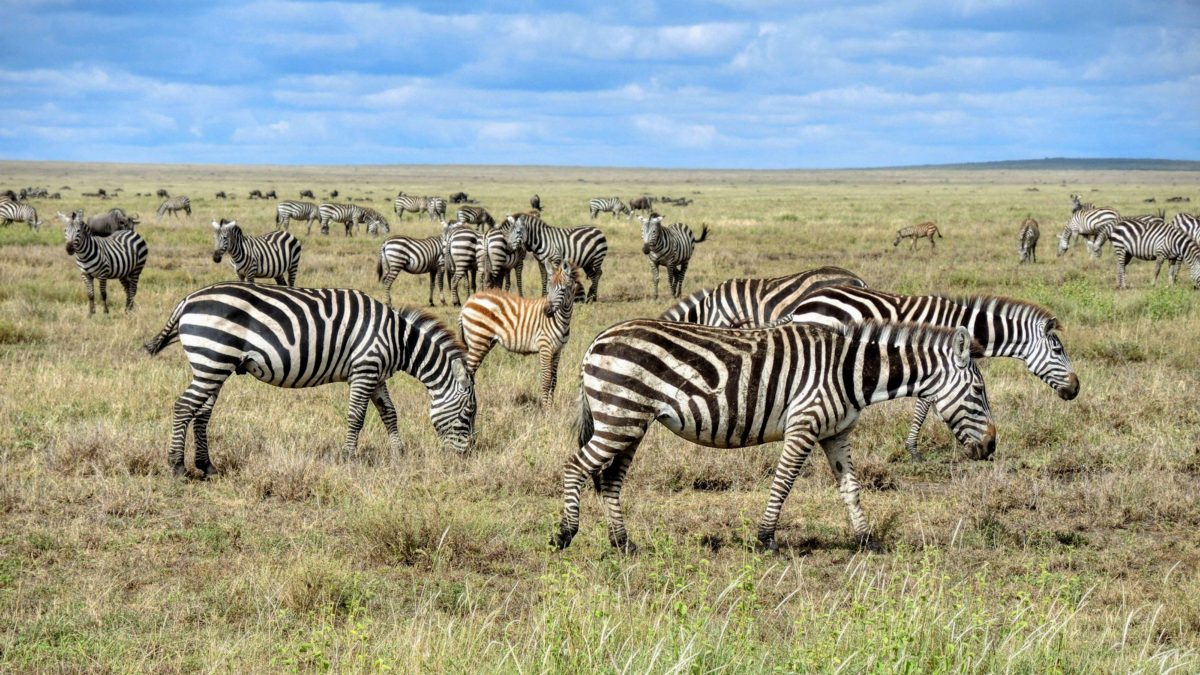
A herd of zebras grazing on a grassy plain.
In short

The one-line answer

Do both, Serengeti first and the crater second, because they're two hours apart and they do completely different things.

The Serengeti is scale and patience. The crater is density and a six-hour clock. If you genuinely have to pick one and have two days, take the crater. With a week, the Serengeti is why you come.

A large herd of elephants moving across a green plain under white clouds.
One more thing

A note on the conservation area

Bear in mind that the crater is about three per cent of the Ngorongoro Conservation Area. Empakaai and Olmoti, both walkable with a ranger, Olduvai Gorge, and the Ndutu plains where the calving happens are all inside the same boundary and are commonly missed entirely.

More from the journal

Keep reading

All stories

Journal

Altitude on Kilimanjaro

Altitude, not fitness, stops most people. The way acclimatisation is managed on the mountain, and why this article…

Talk to a safari expert on WhatsApp (opens in a new tab)