Safaris
Kilimanjaro
Destinations
Experiences
Travel guide
About
Contact Call +255 764 006 061 Plan Your Safari
Journal · · 7 min read

Serengeti or Masai Mara?

The same ecosystem, split by a border. The real differences are size, season, crowding and how you get there.

Last updated
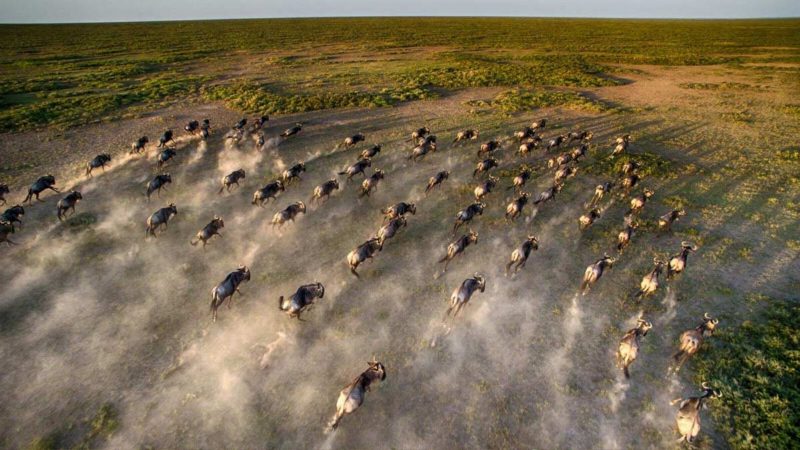
They are the same ecosystem. The Masai Mara in Kenya and the Serengeti in Tanzania are divided by an international border that the wildebeest ignore entirely. The northern Serengeti runs straight into the Mara, and the herds move between them.

Since this is a Tanzanian operator's website, take the following with that in mind. The honest position is that both are excellent and the choice usually comes down to practicalities, not to one being better.

Size

The Serengeti is very much larger. The Mara is roughly the size of one of the Serengeti's regions. That has two consequences. The Serengeti absorbs visitors better, so outside the peak crossing weeks you can drive for long stretches without seeing another vehicle. And it takes longer to cover, which means longer trips and often internal flights.

The Mara's compactness is a genuine advantage on a short trip. More wildlife per hour of driving.

Season

The herds spend most of the year in the Serengeti and a shorter stretch in the Mara, roughly in the second half of the year. If you're travelling early in the year, the Serengeti has the migration. The calving season on the southern plains has no Kenyan equivalent.

If you're travelling specifically for river crossings in the peak months, both offer them.

Crowding

The Mara is smaller and receives a lot of visitors, and crossing-season vehicle numbers at the popular crossing points are well documented. The northern Serengeti gets busy too, but there's more room to spread out.

Off-road driving

Rules differ by area and change, so check current conditions instead of trusting a blog. Broadly, the conservancies bordering the Mara allow more flexibility, such as off-road driving, night drives and walking, than a Tanzanian national park does. For photographers that flexibility is a real consideration.

In Tanzania, the Ngorongoro Conservation Area side around Ndutu permits off-road driving where the national park doesn't, which is part of why the calving season works so well for photography.

Cost and access

Tanzanian park fees are high and are a large share of any safari price here. Kenyan fees vary by area, and Mara conservancies can be expensive in their own way. Neither is reliably cheaper.

Access is the more practical difference. The Mara is a short flight or a long drive from Nairobi. The Serengeti is a longer haul from Arusha, usually broken by other parks or replaced with a flight.

The real advantage of the Serengeti side

What you can build around it. A Tanzanian trip naturally combines the Serengeti with the Ngorongoro Crater, Tarangire and Lake Manyara, genuinely different environments within a few hours of each other, and then with Kilimanjaro or Zanzibar. That combination is harder to assemble on the Kenyan side.

If the migration is the whole point and you have a few days, the Mara is efficient. If you want a varied trip with the migration in it, the Serengeti sits inside a better circuit.

Itineraries

Safaris we run

All safaris
A cheetah lying on top of a termite mound, with hills in the distance.
The short answer

Which one, and when

They are the same ecosystem divided by an international border, and the herds move between them freely. The question is therefore not which has better wildlife. It's which suits your trip.

The Serengeti is roughly fifteen times larger. That means more space, fewer vehicles per sighting, longer drives, and regions that are a full day apart. It rewards a longer trip: two nights minimum in one region, three to be unhurried, and eight days or more to see it properly.

The Masai Mara is compact. You can cover a great deal of it in a few days, sightings are dense, and the logistics are simpler. It suits a short trip, and it combines easily with the Kenyan coast or with Amboseli.

For crossings, both work in roughly July to October, because the same river runs through both and the herds cross in both directions.

If you have four or five days, the Mara is the more efficient choice. If you have a week or more, the Serengeti gives you more, and the northern Serengeti in the crossing season is much less crowded than the Mara equivalent.

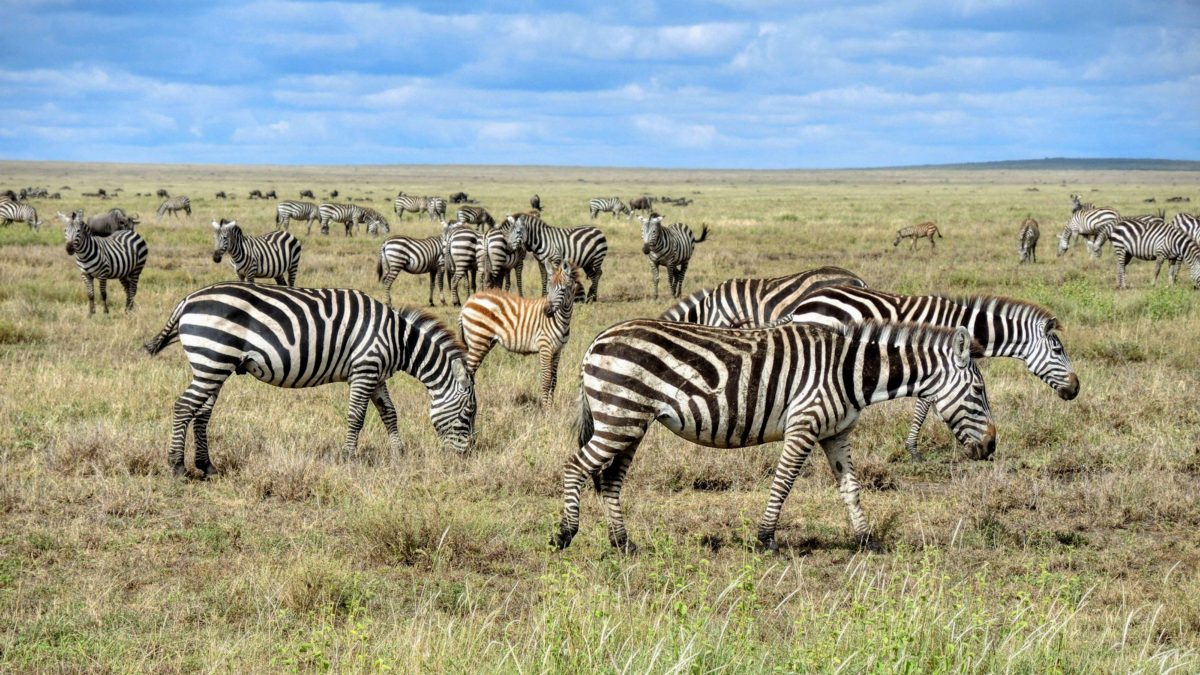
A herd of zebras grazing on a grassy plain.
Comparing

The practical differences

Size
Serengeti around 14,750 sq km. Masai Mara National Reserve around 1,510 sq km, with adjoining conservancies adding more.
Vehicle density
Substantially higher in the Mara, particularly at crossings and big cat sightings. The Serengeti absorbs vehicles better simply because there's more of it.
Off-road driving
Prohibited in the Serengeti except in designated areas. Permitted in some Mara conservancies, which is a genuine advantage for photographers.
Night drives and walking
Not allowed in the Serengeti national park. Available in several Mara conservancies and in Tanzanian wildlife management areas outside the park.
Access
The Mara is a short flight or a long drive from Nairobi. The Serengeti is a full day's drive or a short flight from Arusha.
Combining
The Serengeti pairs naturally with Ngorongoro, Tarangire and Zanzibar. The Mara pairs with Amboseli, Nakuru and the Kenyan coast.
Crossings
Both, roughly July to October.
Walkers with binoculars standing on a rise, watching herds spread across the plain below.
Planning

Can you do both?

You can, and a few people do, but it's worth understanding what it costs before deciding.

The two are adjacent on the map and awkward in practice. There is no open tourist border crossing directly between the northern Serengeti and the Mara for vehicles, so the usual routing is a flight, Kogatende to Nairobi or via Arusha, and two sets of immigration, park fees and operator arrangements.

That means a combined trip loses most of a day to the transfer and carries the fixed costs of two countries. On a two-week holiday it's entirely feasible. On ten days it eats the itinerary.

The stronger argument for doing both is that they're different in character, not in wildlife. The Mara for density and conservancy activities like night drives and walking, the Serengeti for scale and for the rest of the northern circuit.

For most people, one country done properly beats two done partially. If the crossings are the goal, choose the side with the better camp availability for your dates and give it three or four nights.

A lioness and four half-grown cubs resting on a grassy rock outcrop.
Practical

How to decide between them

If you have four or five days, take the Mara. It is compact, sightings are dense, the logistics from Nairobi are simple, and you can cover a great deal of it quickly.

If you have a week or more, take the Serengeti. The scale is the attraction, the northern Serengeti in the crossing season is much less crowded than the Mara equivalent, and it combines naturally with Ngorongoro, Tarangire and Zanzibar.

If off-road driving or night drives matter to you, the Mara conservancies permit both and the Serengeti national park permits neither. That is a genuine advantage for photographers.

If the crossings are the goal, either works between roughly July and October. The same river runs through both and the herds cross in both directions. Choose the side with better camp availability for your dates.

If you want to do both, budget two weeks and expect to fly between them with two sets of immigration and park fees. On ten days it eats the itinerary.

For most people, one country done properly beats two done partially.

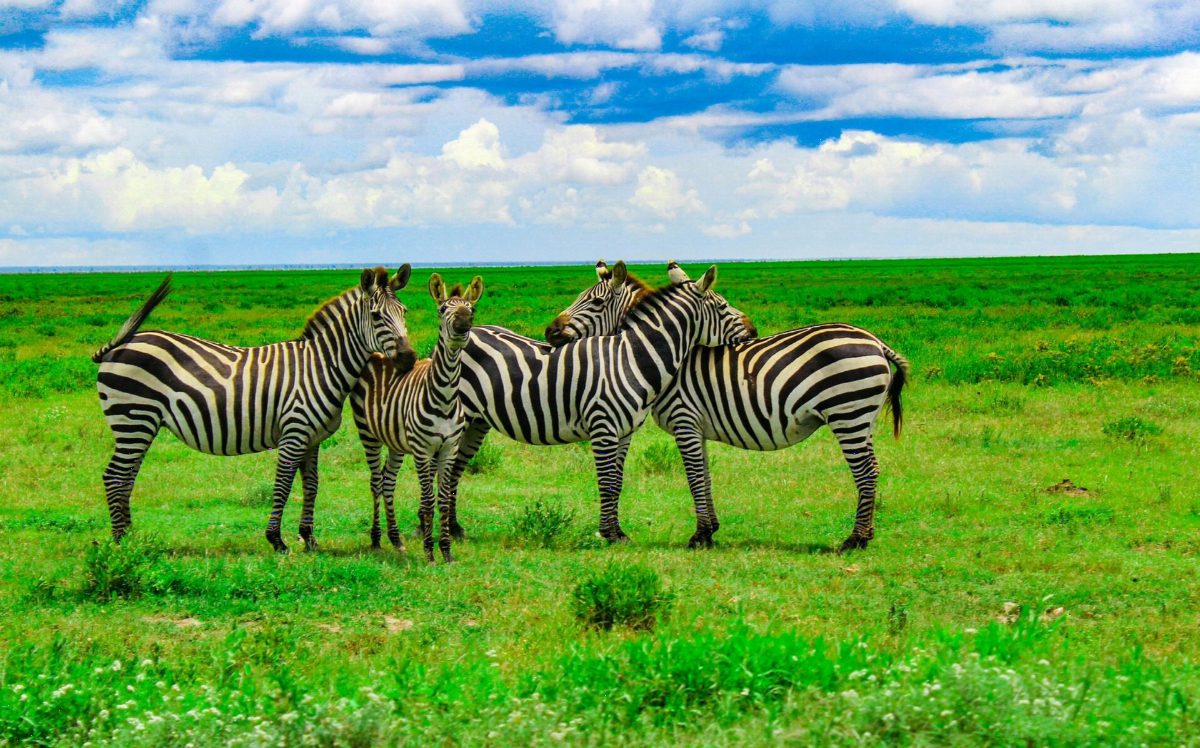
Zebras grazing on a bright green plain under a blue sky.
Practical

Costs and logistics compared

The two differ in ways that show up on a quote as much as on the ground.

Park fees are charged per person per 24-hour period in both, and both are among the higher-priced parks in Africa. Tanzania adds Ngorongoro crater entry if you include it, which is levied per vehicle as well as per person and is the largest single daily fee on the northern circuit.

Access differs more. The Masai Mara is a short flight or a five-to-six hour drive from Nairobi. The Serengeti is a full day's drive or a roughly hour-long flight from Arusha, which itself is an hour from Kilimanjaro International.

Conservancies around the Mara charge their own fees and in exchange permit night drives, walking and off-road driving that the national reserve and the Serengeti national park don't.

Combining the two means two sets of park fees, two operators, and a flight with two immigration crossings. Feasible on two weeks, and an expensive way to spend ten days.

A cheetah cub nuzzling its mother on short grass.
In short

The short answer

Four or five days: the Mara. A week or more: the Serengeti. Both for the crossings between July and October, so pick on camp availability for your dates.

Elephants and zebras side by side on a plain below a tall acacia.

What they share

Remember how much of this comparison is a matter of borders, not ecology.

The Serengeti and the Masai Mara are one ecosystem. The same herds move between them, the same Mara River runs through both, and the same predators follow the same prey across a line drawn by colonial administrators, not by anything the animals recognise.

That means the wildlife argument is largely a false one. Lion, leopard, cheetah, elephant and buffalo are present in both, in comparable densities in comparable habitat, and the crossings happen on both sides.

The real differences are scale, vehicle pressure, the rules about off-road driving and night activities, and what each combines with. Ngorongoro and Zanzibar on one side, Amboseli and the Kenyan coast on the other.

Choose on those, on your dates, and on camp availability. Not on which one has better animals.

More from the journal

Keep reading

All stories

Journal

Altitude on Kilimanjaro

Altitude, not fitness, stops most people. The way acclimatisation is managed on the mountain, and why this article…

Talk to a safari expert on WhatsApp (opens in a new tab)