Full day
Chemka Hot Springs
The Chemka Hot Springs lie about 40 kilometres from Moshi, in the village of the same name. They are…

Around twenty to thirty minutes outside Moshi are the Materuni waterfalls. Because it is so close, it fits into a spare half day, including the drive from Moshi. The falls are around 150 metres high.
The walk in runs through village farmland and coffee plots on the lower slopes of Kilimanjaro, and the pool at the base is cold enough to be bracing rather than pleasant — most people go in anyway. Wear shoes with grip; the path is steep in places and stays muddy after rain.
This is the shortest of the day trips from Moshi, which makes it the easiest one to fit onto an arrival or departure day.
Day trips are quoted individually, because the cost depends on how many of you there are and where you are starting from. Transport, a guide and entry fees where they apply are arranged for you — tell us your dates and we will come back with a price and what it covers.
Most of these work well on an arrival or departure day, or as a rest day either side of a Kilimanjaro climb.
Nearby: Mount Kilimanjaro National Park
The drive out of Moshi climbs steadily onto Kilimanjaro's southern slopes, and the change over forty minutes is striking: dry lowland scrub gives way to banana and coffee smallholdings, the air cools, and the road narrows into the village of Materuni at around 1,500 metres. On a clear morning Kibo stands directly above you for most of the drive.
From the village a local guide takes you down the path to the falls. It is around forty-five minutes, mostly downhill, on a track that crosses the stream several times and is genuinely slippery after rain. The vegetation closes in as you descend. Tree ferns, wild banana, moss on everything. You hear the falls a long time before you see them.
The waterfall drops something over eighty metres into a plunge pool in a narrow amphitheatre of rock. The spray reaches most of the viewing area. People swim, but be warned that the water is very cold. This is snowmelt and spring water off the mountain, not a warm tropical pool.
The climb back out is the part nobody mentions in advance. It is the same forty-five minutes in reverse, uphill, and it's the reason closed shoes matter.
Most trips finish with the coffee, back in the village.

The Chagga farmers on these slopes have grown arabica since the late nineteenth century. The coffee part of a Materuni day shows a real working process, not a performance.
You pick cherries from the bush, then pulp them, then dry them, then roast the beans over a fire in a clay pot, then pound them in a wooden mortar with a heavy pestle. It is harder work than it looks. There is usually singing, because the song keeps the rhythm of the pounding. Then you drink it.
The whole sequence takes an hour or so and it's the part most people remember, partly because you do all of it yourself instead of watching.
Do it because this is how a large part of the local economy actually works. The smallholdings on Kilimanjaro's southern slopes are small, family-held plots, and coffee, banana and maize grown together in the same plot is the traditional Chagga system.
Buy some to take home if you like it. It is cheaper here than anywhere else and the money goes to the household that grew it.
Closed walking shoes with grip. The path down to the falls is steep, rooty and slippery, particularly in the wet season, and sandals are a bad idea.
A towel and something to change into if you intend to swim. The pool is very cold and there's nowhere private to change beyond the bushes.
A light rain layer. Kilimanjaro's southern slopes catch rain in any month and afternoon showers are common.
Cash in small denominations for the village guide, the community fee and the coffee. Cards aren't usable.
Insect repellent for the lower forest.
Expect the walk both ways to take around ninety minutes in total, plus time at the falls and an hour for the coffee. With the drive from Moshi, the whole day runs to five or six hours.
The trip isn't suitable for anyone who can't manage a steep forty-five-minute climb. There is no vehicle access to the falls.
Materuni works year-round, but the experience changes a lot with the rain.
In the dry months, June to October and January to February, the path is firm, the descent is straightforward and the falls run lower but are still substantial. Visibility of Kibo from the village on the drive up is best in these months, particularly early.
In the wet months the falls are at their most dramatic and the path is genuinely slippery. Both matter: it's the better photograph and the harder walk. Sturdy footwear stops being a recommendation and becomes a requirement.
Go early whatever the season. The site is popular with day visitors from Moshi, the village car park fills by late morning, and the falls are much better without twenty other people in the amphitheatre. Cloud also tends to build on the southern slopes through the day, so the morning gives you the mountain views on the drive.
Afternoon rain is common on these slopes in most months, which is another reason to start early instead of making a day of it.
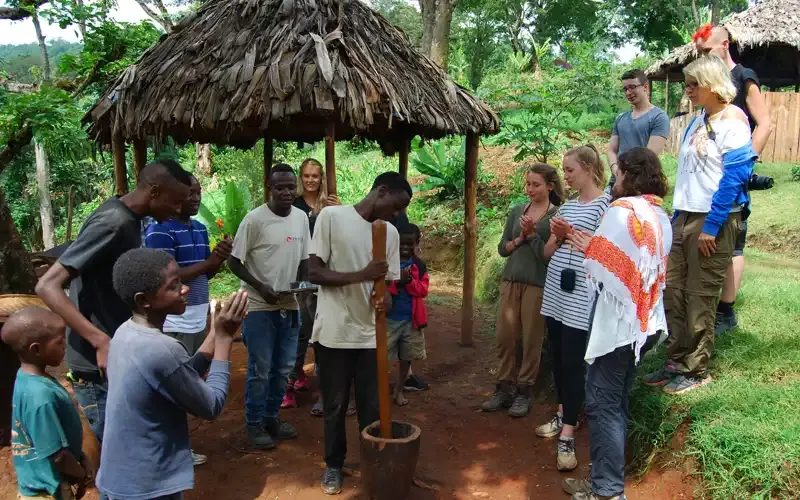
Materuni sits in Chagga country on Kilimanjaro's southern slopes, and several things worth seeing are close by.
The Chagga underground caves at Kilema and elsewhere on these slopes are tunnel systems dug as refuges during the nineteenth-century conflicts with Maasai raiding parties, and some can be visited with a local guide.
Kilasiya and Ndoro falls are smaller waterfalls in the same belt of forest, quieter than Materuni and often combined with it.
The Marangu gate, and the Kilimanjaro day hike that starts there, is around forty minutes east and can be paired with Materuni across two days from the same base.
Give Moshi itself an afternoon: the clock tower, the market, and a coffee shop culture that reflects what grows on the slopes above.
And Chemka Hot Springs is on the other side of Moshi, roughly ninety minutes away, which makes it the natural pairing for a second day. A walking day followed by a swimming one.
Forty minutes from Moshi up Kilimanjaro's southern slopes, then a forty-five minute walk down to a waterfall of over eighty metres, a cold plunge pool, and the same walk back up. Most trips finish with a Chagga coffee demonstration in the village, which is the part people remember.
Bring closed shoes with grip, a towel, a light rain layer and cash in small denominations. The climb out is the hard part and it's why sandals are a bad idea.
Allow five to six hours in total. Go early, both for the mountain views on the drive and because the falls are much better without twenty other people in the amphitheatre.

Forty minutes from Moshi, a forty-five minute walk down and back up, a waterfall of over eighty metres, a cold plunge pool and a Chagga coffee demonstration. Closed shoes with grip, a towel and cash. Five to six hours in total, and go early.
A few decisions make the difference between a good Materuni day and a crowded one.
Leave Moshi early. The village car park fills by late morning, the falls are far better without twenty other people in the amphitheatre, and the mountain is usually clear on the drive up before cloud builds on the southern slopes.
Do the walk first and the coffee second. Coming back up the path is the hard part of the day and it's better done before an hour of sitting down.
Bring more cash than you expect to need, in small notes: there's the community fee, the village guide, the coffee, and usually something you want to take home.
And accept that you'll get wet. The spray reaches most of the viewing area whether or not you go into the pool.
Full day
The Chemka Hot Springs lie about 40 kilometres from Moshi, in the village of the same name. They are…
Full day
Lake Chala is a crater lake in a caldera on the border of Tanzania and Kenya, on the eastern edge of Mount…
Full day
Approximately one hour outside Moshi town lies Njoro Forest. By bicycle or simply on foot, you explore the…
Tell us your dates and where you are staying, and we will price it and sort the transport.